You Won’t Believe These Hidden Gems Along Namibia’s Skeleton Coast
The Skeleton Coast in Namibia isn’t just a place — it’s a surreal journey into raw nature. I’ve always chased unique landscapes, but this stretch of desert, ocean, and shipwrecks blew my mind. It’s remote, wild, and unforgiving, yet holds some of the most breathtaking scenes on Earth. If you're seeking untouched beauty and powerful natural drama, this is it. Let me guide you to the spots that made my trip unforgettable.
Why the Skeleton Coast Should Be on Every Adventurer’s Radar
The Skeleton Coast stands as one of the planet’s most enigmatic landscapes, where the endless dunes of the Namib Desert spill dramatically into the cold, churning waters of the Atlantic Ocean. This 500-kilometer stretch of shoreline, running from the Kunene River in the north to the Swakop River in the south, earns its haunting name from the countless shipwrecks that lie half-buried in sand and salt, silent witnesses to centuries of maritime peril. The region’s defining features — its isolation, extreme climate, and otherworldly beauty — make it a destination unlike any other on Earth.
What sets the Skeleton Coast apart is not just its visual drama, but the profound sense of untouched wilderness it preserves. With less than 10,000 visitors annually and vast sections accessible only by charter flight or rugged 4x4 expeditions, human impact remains minimal. This allows the landscape to remain as nature intended: raw, unfiltered, and awe-inspiring. The coast is part of the Namib Sand Sea, a UNESCO World Heritage Site recognized for its ecological and geological significance. The interplay between desert and ocean creates a unique microclimate defined by persistent fog, sculpted dunes, and a fragile yet resilient ecosystem.
For travelers seeking authenticity beyond curated tourist experiences, this region offers something rare: a chance to witness nature in its purest form. There are no souvenir shops, no crowded viewpoints, no artificial attractions. Instead, there is silence, wind, and the rhythmic crash of waves against desolate shores. It’s a place where solitude becomes a companion and every footprint feels like a discovery. The Skeleton Coast is not for those who crave comfort or convenience — it is for those who understand that true beauty often lies at the edge of the unknown.
Navigating Access: How to Get There and When to Go
Reaching the Skeleton Coast requires careful planning and a spirit of adventure. Due to its protected status and extreme terrain, access is limited and regulated. Most travelers enter through two primary routes: fly-in safaris or self-drive 4x4 expeditions. Fly-in options typically depart from Windhoek or Swakopmund, landing at remote airstrips near key areas such as Hoanib Valley or the Hoarusib River. These flights offer not only convenience but also a breathtaking aerial perspective of the coastline’s vastness, revealing patterns of dunes, dry riverbeds, and fog rolling inland like ghostly rivers.
For those choosing the overland route, the journey usually begins in Khorixas or Skeleton Coast Park’s southern gate near the Ugab River. This path demands a high-clearance 4x4 vehicle equipped with spare tires, recovery gear, and extra fuel and water. The terrain includes soft sand, rocky outcrops, and unpredictable river crossings, making mechanical preparedness essential. GPS navigation and detailed topographic maps are non-negotiable, as cell service is nonexistent and landmarks can be sparse. Travelers must also secure permits from Namibia’s Ministry of Environment, Forestry and Tourism well in advance, especially for visits to the northern, more restricted zones.
The ideal time to visit is during the Southern Hemisphere’s winter months, from May to October. During this period, daytime temperatures are mild, averaging between 15°C and 25°C (59°F–77°F), while nighttime lows remain manageable with proper gear. More importantly, this season brings the iconic fog — a defining feature of the coast. Driven by the cold Benguela Current, the fog rolls in most mornings, creating ethereal lighting conditions perfect for photography and enhancing the area’s mystical atmosphere. Summer months, in contrast, bring higher temperatures and stronger winds, increasing the physical demands of travel.
The Top Scenic Hotspots You Can’t Miss
Within the vast expanse of the Skeleton Coast, several locations stand out for their visual power and emotional impact. One of the most surreal is the Marienfluss Valley, often described as a hidden cathedral of clay. Here, towering dolerite formations rise from a cracked, mineral-rich basin, their surfaces eroded into delicate spires and arches. At sunrise and sunset, the clay walls glow in shades of rust, amber, and deep purple, casting long shadows across the valley floor. Though technically inland, Marienfluss is considered part of the greater Skeleton Coast experience due to its proximity and geological connection.
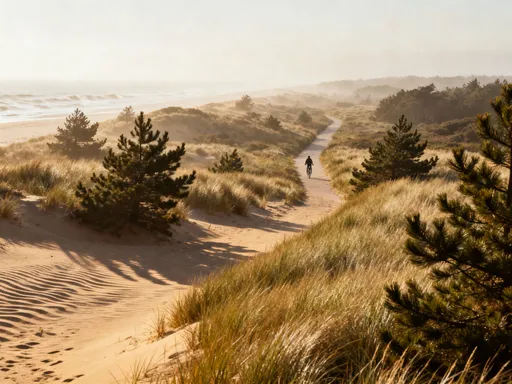
Equally striking is Conception Bay, located along the central stretch of the coast. This wide, sweeping bay is flanked by some of the tallest active dunes in the world, which tumble down to meet the sea in dramatic fashion. The contrast between the golden sands and the deep blue ocean creates a powerful visual tension, heightened during high tide when waves crash directly against the dune bases. The area is also known for its dynamic light — soft and diffused in the early morning, sharp and angular in the afternoon — making it a favorite among landscape photographers.
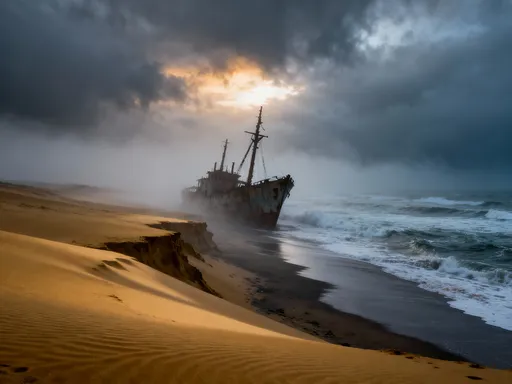
No visit would be complete without witnessing the shipwrecks that give the coast its name. Scattered along the shoreline, particularly near Cape Frio and the Agate Beach area, these rusting hulks lie half-buried in sand, their skeletal frames slowly being reclaimed by nature. The Eduard Bohlen, a German cargo ship that ran aground in 1909, now sits nearly a kilometer inland due to shifting dunes — a testament to the desert’s relentless movement. These wrecks are not just photographic subjects; they are monuments to human ambition and nature’s indifference, each with a story of storm, navigation error, or mechanical failure.
Wildlife in the Midst of Desolation: What You Might See
Despite its harsh conditions, the Skeleton Coast supports a surprising variety of life, adapted to survive in one of the driest places on Earth. One of the most remarkable is the desert-adapted elephant, a subspecies of the African savanna elephant that has learned to thrive in arid environments. These elephants travel vast distances between scattered water sources, often following ancient migration routes along dry riverbeds like the Hoanib and Hoarusib. They are smaller than their savanna cousins, with larger feet to navigate soft sand, and exhibit unique behaviors such as digging for groundwater and feeding on moisture-rich plants like the !nara melon.
Brown hyenas, another elusive resident, are frequently spotted near seal colonies and shipwreck sites, scavenging for food. Unlike their more social spotted cousins, brown hyenas are largely solitary and nocturnal, making sightings rare but deeply memorable. Their presence is a sign of a functioning ecosystem, where even the most inhospitable landscapes support complex food webs. Along the coast, Cape fur seals thrive at colonies such as Cape Cross, located just south of the official park boundary. While not within the core Skeleton Coast zone, this colony of over 100,000 seals is often included in extended itineraries and offers a dramatic sensory experience — the barking, the smell, the movement of thousands of animals on rocky shores.
Birdlife, though limited in number, is equally fascinating. The coastal fog provides vital moisture for species like the lark-like stone bunting and the Namib dune lark, both endemic to the region. Near river mouths and ephemeral wetlands, flamingos, herons, and ospreys can appear after rare rainfall events. Birdwatchers should focus on the lower reaches of the Hoanib and Uniab rivers, where vegetation is slightly denser and water sources more reliable. All wildlife viewing should be conducted responsibly — maintaining distance, avoiding noise, and never feeding animals. The ecosystem is fragile, and even minor disturbances can have lasting impacts.
Photography Tips for Capturing the Coast’s Ethereal Mood
For photographers, the Skeleton Coast offers a masterclass in light, texture, and mood. The key to capturing its essence lies in understanding the rhythm of the day and the behavior of the fog. Early morning is often the most rewarding time, when the fog rolls in from the ocean, wrapping dunes and shipwrecks in soft, diffused light. This creates a dreamlike atmosphere, perfect for long exposures and minimalist compositions. As the sun rises, the fog begins to burn off, revealing sharp contrasts between shadow and illumination — ideal for emphasizing the textures of rusted metal, cracked clay, or wind-rippled sand.
Late afternoon brings another peak window, especially for dune photography. With the sun low in the sky, shadows stretch across the landscape, highlighting the curves and ridges of the sand. A wide-angle lens is essential for capturing the vastness of the terrain, while a telephoto lens can isolate details — a single footprint in the sand, the weathered nameplate of a shipwreck, or a distant herd of elephants crossing a dry riverbed. A tripod is highly recommended, particularly for low-light conditions and long exposures during foggy mornings or twilight.
Protecting your gear is just as important as composing your shots. The combination of fine sand, salt spray, and high winds can quickly damage cameras and lenses. Use weather-sealed equipment if possible, and keep your gear in sealed bags when not in use. A microfiber cloth should always be on hand to wipe away moisture and dust. Consider using lens hoods and filters to reduce glare and protect front elements. Most importantly, take your time. The Skeleton Coast does not reveal itself quickly. Some of the most powerful images emerge not from chasing the perfect shot, but from waiting, observing, and letting the landscape speak.
Staying Safe and Respecting the Environment
Traveling in the Skeleton Coast demands a high level of self-reliance and respect for the environment. Safety begins with preparation: every vehicle should carry at least two spare tires, a full recovery kit (including winch, shovels, and traction boards), extra fuel (minimum 100 liters beyond calculated needs), and at least seven days’ worth of water per person. Communication devices such as satellite phones or personal locator beacons (PLBs) are essential, as there is no mobile network coverage in the region. Informing authorities or tour operators of your itinerary and expected return time is a critical step that should never be skipped.
Environmental responsibility is equally vital. The coastal plains and dune fields are incredibly fragile; a single vehicle track can last for years in the absence of rain. Always stick to established tracks, and avoid driving on vegetated areas or salt pans. The principle of Leave No Trace applies fully here: pack out all waste, avoid disturbing wildlife, and never remove natural objects such as stones or shells. Campfires are strictly prohibited due to the risk of dune fires, which can spread rapidly in dry conditions. Use portable stoves for cooking, and dispose of grey water responsibly.
The Skeleton Coast is a protected area under Namibia’s national park system, and conservation is a shared responsibility. Visitors should respect all permit conditions, avoid restricted zones, and support eco-conscious tour operators who prioritize sustainability. By traveling mindfully, we ensure that this extraordinary landscape remains preserved for future generations. Every decision — from where you drive to how you dispose of waste — contributes to the long-term health of this irreplaceable ecosystem.
Why This Journey Stays With You Long After You Leave
More than any photograph or souvenir, what remains after a journey to the Skeleton Coast is a feeling — a deep sense of awe, humility, and connection. This is not a destination that entertains; it transforms. In its silence, one confronts the scale of geological time, the power of natural forces, and the fleeting nature of human presence. Standing beside a century-old shipwreck, now buried in sand, one cannot help but reflect on impermanence. Watching a herd of desert elephants walk across a moonlit dune, one feels the resilience of life against all odds.
The emotional impact of the Skeleton Coast lingers because it challenges our modern rhythms. Removed from screens, schedules, and noise, travelers often rediscover a slower, more attentive way of being. Time expands. Senses sharpen. The mind quiets. For many, this experience becomes a benchmark — a reminder of what true wilderness feels like, and why it is worth protecting. It inspires a deeper appreciation for conservation, not as an abstract concept, but as a personal commitment.
Ultimately, the Skeleton Coast calls us to seek more meaningful travel — not just to see new places, but to be changed by them. It invites us to step beyond comfort, to embrace uncertainty, and to find beauty in desolation. For the thoughtful traveler, especially those who value authenticity and depth, this journey offers a rare gift: the chance to witness a corner of the world that remains wild, untamed, and profoundly moving. Let it inspire your next adventure — one that doesn’t just take you somewhere new, but brings you closer to what truly matters.