Wandering Among Rock-Hewn Wonders in Lalibela
Lalibela, Ethiopia, isn’t on everyone’s radar—but it should be. Hidden in the highlands, this ancient town holds one of the world’s most astonishing architectural feats: eleven churches hand-carved from solid volcanic rock. I went not as a pilgrim, but as a wanderer, and left transformed. Walking through these sacred spaces felt like stepping into a living puzzle of faith, labor, and genius. This is more than tourism—it’s witnessing human devotion etched in stone. The air was crisp, the silence deep, and every turn revealed another marvel emerging from the earth like a secret finally spoken. Here, history is not preserved behind glass—it is carved into the landscape, alive with prayer and purpose.
First Steps: Arriving in Lalibela – A Town That Feels Like a Whisper
Reaching Lalibela feels less like arriving at a destination and more like stepping into a hushed moment of time. Perched at over 2,600 meters in the Ethiopian highlands, the town greets visitors with cool, thin air and a stillness that seems to slow the pulse. The journey there—often by small plane from Addis Ababa or a long, winding drive along red-dirt roads—prepares you for what lies ahead: simplicity, elevation, and quiet. There are no towering billboards or bustling cityscapes. Instead, modest stone houses dot the hillsides, and the rhythm of life moves at the pace of prayer and farming.
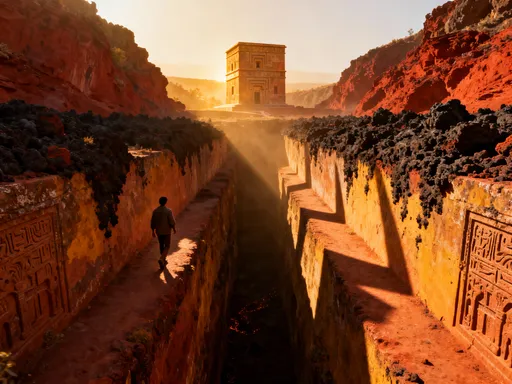
What strikes most upon arrival is the absence of spectacle. Unlike many World Heritage Sites that announce themselves with grand entrances and ticket booths, Lalibela reveals itself gradually. The main rock-hewn complex is not immediately visible. You walk through narrow lanes, past local vendors selling handwoven scarves and wooden crosses, and only then do you begin to sense the depth below. The first glimpse comes unexpectedly—a trench in the earth, and within it, the top of a church rising like a sentinel from the rock. This slow unveiling mirrors the experience of the site itself: understanding comes not all at once, but through patient exploration.
The altitude demands respect. At first, every step can feel heavier, every breath a little shorter. Yet this physical challenge adds to the sense of pilgrimage, even for those who come not for faith but for wonder. The climate, cool and often misty in the early morning, wraps the town in a soft veil, enhancing its mystical aura. Visitors are advised to take the first day slowly, allowing the body to adjust and the mind to settle. This is not a place to rush. The true magic of Lalibela unfolds only to those who are willing to move gently, to listen, and to look closely.
The Eleven Churches: Architecture That Defies Logic
The heart of Lalibela lies in its eleven monolithic churches, carved directly from the living rock between the 12th and 13th centuries under the reign of King Gebre Mesqel Lalibela. The term 'monolithic' is not poetic exaggeration—it means each church was sculpted downward from a single block of volcanic tuff, a soft rock that allowed for intricate detailing yet remained durable over centuries. No stones were quarried and assembled; instead, artisans dug deep into the earth, removing rock to leave behind entire structures, complete with roofs, windows, columns, and even drainage systems.
Among the most breathtaking is Bete Medhane Alem, believed to be the largest monolithic church in the world. Its massive rectangular form, shaped like a basilica, stands over 10 meters tall and is supported by intricately carved pillars. Nearby, connected by a network of trenches and tunnels, is Bete Giyorgis—the Church of St. George—renowned for its perfect cross shape and symmetrical design. Carved in the form of a Greek cross, it descends dramatically into the ground, best viewed from above, where its full geometric harmony becomes visible. The precision of its angles and the depth of its carvings suggest a level of engineering knowledge that remains awe-inspiring even by modern standards.
These churches are not isolated monuments. They are part of a carefully planned complex, linked by a series of passageways, staircases, and underground corridors that evoke the image of a subterranean city. Some tunnels are narrow and low, requiring a slight crouch, while others open into spacious courtyards. The entire layout is believed to symbolize Jerusalem, with rivers represented by trenches and sacred spaces arranged to reflect biblical geography. The scale of labor involved is staggering—historians estimate that tens of thousands of workers labored for decades, using only iron tools, ropes, and sheer determination. What they created was not just a place of worship, but a three-dimensional expression of faith, carved into the very skin of the earth.
Wandering the Trenches: A Pilgrim’s Path, a Traveler’s Discovery
To walk through Lalibela is to experience architecture from the inside out. Unlike traditional buildings where you enter through a door and look around, here you descend into the earth, emerging beside or beneath the structures themselves. The trenches—some over 15 meters deep—create a disorienting yet profound sense of scale. Looking up, the churches loom like fortresses carved into cliffs, their windows and doorways framed against the sky. The perspective shifts constantly, making it difficult to grasp the full form of any single church without circling it completely.
The sensory experience is equally powerful. The air in the trenches is cooler, often damp, carrying the faint scent of incense and old stone. Your footsteps echo against the walls, mingling with the distant sound of chanting from priests conducting services. The steps, worn smooth by centuries of bare feet and sandals, bear the marks of time in every groove. Small niches are carved into the walls—some for candles, others for prayer or storage of sacred objects. These details, easy to miss at first glance, become more meaningful the longer you stay.
One of the most moving aspects of wandering through Lalibela is the coexistence of tourists and pilgrims. While visitors take photos and read guidebooks, local Ethiopians in white cotton robes move with quiet purpose, lighting candles, prostrating in prayer, or sitting in silent meditation. Some have walked for days to reach this holy site, their faces lined with exhaustion and devotion. Their presence grounds the experience, reminding you that this is not a ruin, but a living place of worship. To wander here is not just to observe, but to participate in a continuum of faith that spans generations.
There is value in allowing yourself to get slightly lost. Without a strict itinerary, you might stumble upon a hidden carving of a serpent or a small altar tucked into a corner. These discoveries feel personal, as if the site is revealing its secrets only to those who take the time to look. The act of wandering—without rushing, without checking a list—becomes a form of reverence in itself.
Beyond the Stones: The Living Spirit of Lalibela
Lalibela is not a museum frozen in time. It is a vibrant center of Ethiopian Orthodox Christianity, where daily rituals continue as they have for centuries. Priests in long robes move through the churches, swinging censers that release clouds of frankincense, their chants resonating through stone corridors. Services are held regularly, often accompanied by the rhythmic beat of drums and the shaking of sistrums—ancient musical instruments that add a spiritual cadence to worship. Fasting is observed on Wednesdays, Fridays, and during Lent, and many pilgrims arrive during these periods to deepen their spiritual practice.
The most vivid expression of Lalibela’s living faith is the annual Timkat festival, celebrating Epiphany in January. During this time, the town transforms. Thousands of pilgrims gather, dressed in white, carrying brightly colored umbrellas and crosses. The air fills with song and prayer as processions wind through the trenches and around the churches. The Ark of the Covenant—represented by a tabot, a sacred replica—is carried in solemn procession, symbolizing the presence of God among the people. The energy is electric, joyful, and deeply moving, offering visitors a rare glimpse into the heart of Ethiopian spirituality.
For travelers, this living context demands respect. Visitors are expected to dress modestly—covering shoulders and knees—and to remove shoes before entering certain areas. Photography is often restricted during services, and silence is encouraged in sacred spaces. These rules are not arbitrary; they reflect the deep reverence that locals hold for the site. Tourists who approach with humility and awareness are often welcomed warmly, sometimes even invited to observe ceremonies from a respectful distance. The coexistence of tourism and devotion is delicate, but possible when guided by mutual respect.
Choosing the Right Time and Pace
Timing can profoundly shape the experience of visiting Lalibela. The best period is the dry season, from October to March, when rainfall is minimal and the paths—often slippery when wet—are easier to navigate. Clear skies also enhance visibility, making it easier to appreciate the architectural details and aerial views of the churches. April through September brings the rainy season, during which some trenches can flood and access to certain areas may be limited.
Even within the dry season, the time of day matters. Midday brings strong sun and growing crowds, especially around Bete Giyorgis, which is a favorite for photographs. For a more contemplative experience, arriving early in the morning—just after sunrise—offers soft light, cooler temperatures, and fewer people. Late afternoon is equally beautiful, as the setting sun casts long shadows across the rock, highlighting textures and carvings. These quieter moments allow for deeper connection with the site.
To truly absorb Lalibela, a single day is not enough. Spending at least two full days allows for a more thoughtful exploration. The first day can be dedicated to the main northern and eastern groups of churches, while the second offers time to revisit favorite sites, explore at a slower pace, or visit nearby locations. Rushing through the complex risks reducing it to a checklist; lingering allows it to reveal its layers.
While it is possible to explore independently, hiring a local guide enriches the experience immeasurably. These guides are often deeply knowledgeable about the history, symbolism, and religious significance of the carvings and layouts. They can point out details you might otherwise miss—a hidden cross, a symbolic animal, or a story behind a particular pillar. More than just narrators, they serve as cultural bridges, helping visitors understand not just what they are seeing, but why it matters.
Exploring Beyond the Main Complex
While the eleven churches are the centerpiece, Lalibela’s spiritual and cultural landscape extends beyond the main site. A short distance away lies Asheton Maryam, a cave church carved into a cliffside, renowned for its well-preserved murals depicting biblical scenes and saints. The journey there—a 45-minute hike up a steep path—adds to the sense of pilgrimage. Inside, the air is cool and dim, lit only by candlelight, creating an intimate atmosphere of devotion. The paintings, though centuries old, retain vivid colors, their details whispering stories of faith and endurance.
Another significant site is the Abba Garima Monastery, believed to be one of the oldest Christian monasteries in Ethiopia. While access can be restricted due to its active religious use, visitors may be allowed to view its ancient manuscripts and see the iconic sycamore tree said to have sheltered the monk Abba Garima upon his arrival. The monastery represents a quieter, more contemplative side of Ethiopian Christianity, where scholarship and solitude are honored.
For those seeking natural beauty, Selassie Lake offers a peaceful retreat. Located about 10 kilometers from Lalibela, this serene body of water is surrounded by hills and eucalyptus trees. It is considered sacred, believed to be connected by an underground river to the Jordan River. Many pilgrims bathe here before visiting the churches, symbolizing purification. Sitting by the lake, watching the light dance on the water, provides a moment of stillness amid the intensity of the rock-hewn site.
Equally enriching are the everyday moments in town. Visiting the local market offers a chance to engage with residents, buy handmade crafts, or sample traditional food. Participating in a coffee ceremony—where beans are roasted, ground, and brewed in front of you—is a warm invitation into Ethiopian hospitality. These interactions remind visitors that Lalibela is not just a historical site, but a living community with its own rhythms and traditions.
Why Lalibela Changes How You See Travel
Lalibela does not offer the comforts of luxury resorts or the distractions of shopping districts. It does not cater to the desire for convenience. Instead, it challenges the very idea of what travel can be. This is not tourism as consumption, but as contemplation. Standing before a church carved from a single block of rock, you are forced to confront the depth of human creativity, patience, and belief. The scale of effort—spanning decades, driven by faith—puts modern life into perspective.
In a world where destinations are often chosen for their Instagram appeal or ease of access, Lalibela stands apart. It asks for more: time, effort, respect. But in return, it offers something rare—a sense of awe that lingers long after you leave. It reminds us that some of the most powerful experiences are not found in grandeur alone, but in the quiet persistence of meaning. Here, stone is not just material; it is memory. Silence is not emptiness; it is presence.
More than any souvenir or photograph, what stays with you is the feeling of having touched something ancient and enduring. Lalibela changes how you see travel because it shifts the focus from seeing to feeling. It invites you to wander not just through space, but through time and spirit. In doing so, it redefines discovery—not as the accumulation of sights, but as the opening of the heart. For the traveler willing to listen, to move slowly, and to look deeply, Lalibela offers not just a destination, but a revelation.