This Is Why Montreal’s Wild Side Steals Your Heart
You know that feeling when a city surprises you with forests, rivers, and quiet trails instead of just skyscrapers? That was me in Montreal. I went expecting cafes and culture—but stayed for the trees, the stillness, the slow rhythm of nature woven right into the urban fabric. Forget rushing through landmarks; this is travel with breath, space, and soul. Let me show you the side of Montreal you won’t find in most guides. This is a city where urban life doesn’t overpower nature—it embraces it, shares space with it, and in many ways, depends on it. From the moment you step off the metro near a tree-lined avenue or catch a glimpse of the St. Lawrence River shimmering in the morning light, you sense that something here is different. Montreal isn’t just a cultural capital. It’s a sanctuary where city dwellers and visitors alike can reconnect with the natural world without ever leaving the island.
Reimagining Montreal: More Than a City
Montreal is often portrayed as a city of festivals, bistros, and cobblestone streets that echo with the charm of Paris. While these elements are undeniably part of its identity, they only tell half the story. The other half unfolds in the rustle of autumn leaves along the Botanical Garden paths, in the quiet hush of dawn at Cap-Saint-Jacques Nature Park, and in the way sunlight filters through the canopy above the Lachine Canal. What sets Montreal apart from other North American cities is its deep integration of nature into the rhythm of everyday life. Unlike urban centers where parks are isolated oases, Montreal’s green spaces are interconnected, expansive, and accessible. The city occupies an island at the confluence of the St. Lawrence and Ottawa rivers, a geographic gift that has shaped its development and identity. This natural setting is not incidental—it is foundational.
More than half of Montreal’s land area is composed of parks, forests, wetlands, and agricultural zones. The city’s commitment to preserving these spaces is evident in its extensive network of bike paths, protected shorelines, and biodiversity initiatives. Residents don’t just visit nature on weekends; they live alongside it. Children walk to school through tree-shaded neighborhoods, cyclists commute along riverfront trails, and families gather in parks for evening strolls. This seamless blending of urban and natural environments fosters a unique quality of life—one that prioritizes well-being, sustainability, and a slower pace of engagement with the world. For travelers, this means an opportunity to experience a major city without the sensory overload often associated with metropolitan travel.
Montreal invites a different kind of exploration. Instead of racing from museum to market, visitors can follow the flow of the seasons, tracing the city’s transformation from snowy stillness to summer bloom. The island’s geography makes it easy to shift from bustling downtown streets to peaceful forest trails in under twenty minutes. Whether you’re crossing the Jacques Cartier Bridge toward Parc Jean-Drapeau or taking the metro to the edge of Bois-de-l’Île-Bizard, the transition feels natural, almost inevitable. This accessibility is key to Montreal’s appeal as a destination for mindful travel. It offers the richness of urban culture while never losing touch with the grounding presence of the natural world.
The Allure of Slow Travel in a Bustling Locale
Montreal is known for its energy—its jazz festival draws hundreds of thousands, its summer streets pulse with outdoor concerts, and its culinary scene is constantly evolving. Yet, beneath this vibrant surface lies a quieter, more contemplative rhythm. Choosing to travel slowly in Montreal means stepping off the treadmill of must-see attractions and allowing yourself to be present in the moment. It means watching ducks glide across the pond in Jeanne-Mance Park, sitting on a bench overlooking the St. Lawrence as cargo ships pass in the distance, or pausing mid-bike ride to inhale the scent of blooming linden trees in late June.
Slow travel in Montreal is not about doing less—it’s about experiencing more deeply. It requires a shift in mindset, a willingness to trade efficiency for immersion. Instead of checking off landmarks, you begin to notice patterns: the way morning light hits the cross on Mount Royal, the seasonal rotation of produce at the Atwater Market, the sound of loons calling from the marshes of Île aux Hérons at dusk. These moments don’t fit neatly into an itinerary, but they linger in memory far longer than any photo from a crowded observation deck.
The city supports this approach through its infrastructure. Wide sidewalks, abundant public seating, and an extensive bike-sharing system encourage lingering and exploration at a human pace. Parks are designed not just for recreation but for rest—benches face natural vistas, walking paths meander rather than cut straight, and noise levels drop noticeably once you step off the main avenues. Even in the busiest neighborhoods, there are pockets of calm: a hidden courtyard in Old Montreal, a quiet stretch of the Canal beyond Griffintown, a community garden in Mile End where neighbors tend to tomato plants and sunflowers.
For visitors, embracing slow travel means planning with flexibility. It means leaving room in the day for unplanned detours, for conversations with locals at a neighborhood café, for sitting on the grass with a book while the world moves by at its own pace. It’s in these unscripted moments that Montreal reveals its true character—not as a checklist of attractions, but as a living, breathing place where nature and city life coexist in harmony.
Mount Royal: The Green Heart of the City
No discussion of Montreal’s natural landscape is complete without Mount Royal Park, the 200-hectare green heart designed by Frederick Law Olmsted, the visionary behind New York’s Central Park. Unlike many urban parks that serve primarily as recreational spaces, Mount Royal is a living ecosystem—a place of forests, meadows, wetlands, and dramatic overlooks. Its winding trails, stone staircases, and scenic viewpoints offer a sense of escape that feels miles from the city, even though it sits at the center of the island.
Visiting Mount Royal is not a single experience but a collection of possibilities shaped by the season and time of day. In winter, the park transforms into a haven for cross-country skiers and snowshoers. The network of groomed trails, maintained by the city and local clubs, allows for hours of quiet exploration beneath snow-laden trees. Early risers might have the paths almost to themselves, the only sound the crunch of snow underfoot and the distant call of a crow. Come spring, the park bursts into life—migratory birds return to the forest canopy, crocuses push through the thawing earth, and the scent of damp soil and budding leaves fills the air.
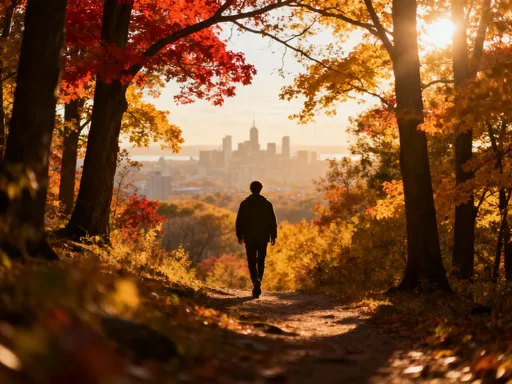
Summer brings picnics on the open lawns, outdoor yoga sessions, and twilight concerts at the Kondiaronk Belvedere. Yet, for those seeking solitude, the park offers hidden corners. The Camillien-Houde Trail, though popular, has quieter stretches in the early morning. The lesser-known path along the western slope, near the old observatory, winds through dense forest and offers glimpses of the city framed by branches. In autumn, the park becomes a masterpiece of color—maple, oak, and birch trees ignite in shades of crimson, gold, and amber, drawing photographers and leaf-peepers from across the region.
What makes Mount Royal truly special is its role as a shared space. It belongs to everyone—joggers, dog walkers, artists, students, and families. It is not a curated attraction but a lived-in landscape, shaped by daily use and seasonal change. To walk its trails is to participate in a tradition of urban nature that has endured for over a century. Olmsted’s original vision—to create a place where city dwellers could find respite in nature—remains alive and relevant, a testament to thoughtful urban planning and the enduring human need for green space.
Island Escapes: Exploring the Archipelago and Jean-Talon Market’s Periphery
Just beyond the core of Montreal lies the Hochelaga Archipelago, a chain of islands that form part of the St. Lawrence River delta. While some, like Île Sainte-Hélène and Île Notre-Dame, are well-known for their recreational facilities and events, others remain quietly wild. These islands offer a unique blend of accessibility and seclusion, allowing visitors to feel far from the city while remaining within easy reach.
Île Sainte-Hélène, connected to the mainland by bridge, is home to Parc Jean-Drapeau, a vast green space that hosts the annual Jazz Festival and Formula 1 Grand Prix. Yet, away from the event zones, the island offers peaceful walking trails, gardens, and views of downtown. The Circuit Gilles Villeneuve, a favorite among cyclists and runners, circles the island with the river on one side and the city skyline on the other. For a more tranquil experience, visitors can explore the nearby Île aux Cygnes, a narrow, forested island connected by footbridge, where herons and kingfishers are frequently spotted.
Further east, the Îles de Boucherville, accessible by seasonal shuttle or bike ferry, provide a true escape into nature. These islands are part of a national park and feature extensive wetlands, marshes, and forested areas. In summer, kayakers paddle through quiet channels, while in winter, the frozen river allows for ice walking and snowshoeing. The contrast between the industrial port to the north and the serene natural landscape of the islands is striking—a reminder of how close wilderness can be, even in a major urban center.
To the north of the city, near the Jean-Talon Market, the landscape shifts again. While the market itself is a bustling hub of local produce and artisanal goods, its surroundings offer green corridors that lead into quieter neighborhoods. The Parc des Rapides, located along the Lachine Rapids, provides walking and biking paths with views of the river and its wildlife. Nearby, the Bois-de-l’Île-Bizard nature park spans over 80 hectares of forest and wetland, offering trails that wind through old-growth trees and along the river’s edge. These spaces are less frequented by tourists but deeply valued by locals, who come here to walk dogs, birdwatch, or simply escape the noise of the city.
Riverside Rhythms: Following the St. Lawrence and Lachine Canal
Water is the lifeblood of Montreal, shaping its history, economy, and daily rhythms. The St. Lawrence River, one of the largest in North America, forms the city’s southern and eastern boundaries, offering expansive views and a sense of openness that few inland cities can match. Along its shores, parks and promenades invite leisurely strolls, while boat tours and kayaking provide a closer connection to the water.
The Lachine Canal, once a vital industrial waterway, has been transformed into one of Montreal’s most beloved recreational corridors. Stretching 14 kilometers from the Old Port to Lake Saint-Louis, the canal is lined with paved paths used by cyclists, runners, and walkers. In summer, the water teems with kayaks and paddleboards, while in winter, sections are cleared for ice skating and snowshoeing. The canal’s bridges, many of them historic swing bridges, add to its charm, and the surrounding neighborhoods—Griffintown, Little Burgundy, Pointe-Saint-Charles—offer a mix of old and new, industrial heritage and urban renewal.
One of the most rewarding ways to experience the canal is at sunrise, when the city is still quiet and the water reflects the soft light of dawn. The path is nearly empty, the air crisp, and the only sounds are the lap of water against the locks and the occasional call of a gull. As the day progresses, the canal comes alive—commuters on bikes, families on tandem rentals, dog walkers pausing to greet neighbors. Cafés and picnic spots dot the route, making it easy to linger.
The St. Lawrence, by contrast, offers a grander scale. At Parc Anse-à-l’Orme or Parc de la Baie-d’Urfé, visitors can watch freighters glide past, their horns echoing across the water. These western points of the island are less developed, with sandy shores and grassy meadows that feel more like lakeside retreats than urban parks. In spring and fall, the river is a key migration route for birds, and binoculars often appear in the hands of patient watchers. Whether seen from a distance or experienced up close, the river reminds visitors of Montreal’s place within a much larger natural system.
Seasonal Shifts: Nature’s Changing Palette Across the Year
Montreal’s natural beauty is not static—it evolves with the seasons, offering a different experience with each turn of the calendar. Winter, often seen as a barrier to outdoor activity, is in fact a time of quiet magic. When snow blankets Mount Royal and the islands, the city slows down. Cross-country skiing, ice skating, and snowshoeing become daily rituals. The Botanical Garden’s Chinese Garden, normally closed in winter, opens for the magical Luminothérapie event, where illuminated installations transform the snowy landscape into a dreamscape.
Spring arrives tentatively, with melting snow revealing crocuses and daffodils in early April. By May, the city bursts into bloom—cherry trees in blossom, lilacs perfuming the air, and parks filling with picnickers. The Jean-Talon and Atwater markets begin to overflow with fresh asparagus, rhubarb, and wild greens, signaling the return of seasonal eating. Migratory birds return to wetlands and parks, and the sound of frogs fills the night air in natural reserves.
Summer is lush and vibrant. The heat brings life to the waterways—kayaking, paddleboarding, and river cruises become popular. The islands are at their greenest, and outdoor festivals make use of every available park and plaza. Yet, even in peak season, there are ways to find calm: early morning walks, shaded forest trails, or a quiet bench overlooking the river. The city’s many fountains and splash pads offer relief, while rooftop gardens and community plots flourish.
Autumn is perhaps the most spectacular. From late September to mid-October, the trees ignite in color. The Botanical Garden, Mount Royal, and the Boucherville Islands become destinations for leaf-peeping. The air turns crisp, farmers’ markets overflow with apples and pumpkins, and the scent of woodsmoke drifts through the neighborhoods. It is a season of reflection, of slowing down before the long winter, and of appreciating the fleeting beauty of change.
Practical Magic: How to Plan a Nature-Focused Stay
Planning a nature-centered visit to Montreal begins with choosing the right neighborhood. Areas like Outremont, Mile End, and Verdun offer walkable streets, proximity to parks, and access to bike paths. Staying near the mountain or the canal means you can step outside and be in nature within minutes. For those without a car, Montreal’s public transit system—buses, metro, and seasonal bike ferries—makes it easy to reach even the more remote natural areas.
Renting a bike is one of the best ways to explore. The city’s BIXI bike-share program has hundreds of stations, and daily or weekly rentals are affordable. Routes like the Route Verte and the Lachine Canal path are well-marked and mostly flat, suitable for all skill levels. For longer trips, folding bikes can be taken on buses and trains, allowing access to parks like Cap-Saint-Jacques or the Boucherville Islands.
Packing should account for variable weather. Layers are essential—Montreal can be hot and humid in summer, but evenings cool down. In spring and fall, rain is common, so a waterproof jacket is wise. In winter, thermal layers, a warm coat, and waterproof boots are necessary for comfort. Regardless of season, a reusable water bottle, comfortable walking shoes, and a small backpack are useful for day trips.
When visiting natural spaces, respect is key. Stick to marked trails to protect plant life, carry out all trash, and avoid disturbing wildlife. Many parks have guidelines for responsible use, and following them ensures these spaces remain beautiful for future visitors. Local cafés near parks—like those in Outremont or along the Canal—offer excellent coffee and pastries, perfect for a pre- or post-walk treat.
Finally, allow for spontaneity. Some of the best experiences in Montreal happen off the itinerary—a conversation with a local gardener, a sudden rain shower that clears the air, a sunset viewed from an unexpected vantage point. By planning with flexibility and an openness to discovery, travelers can truly connect with the city’s wild heart.
Montreal teaches us that cities don’t have to be concrete jungles to feel alive. Its wild heart beats just beneath the surface, waiting for those willing to slow down and listen. By choosing presence over pace, travelers discover not just scenery, but a deeper connection—to place, to peace, and to the quiet joy of simply being. This is not just travel. It’s transformation.