You Gotta See These Hidden Natural Escapes in The Hague
Nature lovers, listen up—The Hague isn’t just about politics and coastal charm. I was blown away by how much green space hides in plain sight. From dunes kissed by sea breezes to tranquil forests just minutes from the city center, these natural gems are perfect for recharging. Whether you're biking through meadows or strolling beside quiet lakes, The Hague delivers peace, beauty, and fresh air—no tourist crowds needed. What surprised me most was how effortlessly the city blends urban life with wild landscapes. You don’t need to leave town to find serenity; it’s woven into the fabric of daily life here. For travelers seeking balance between culture and calm, The Hague offers a refreshing model where nature isn’t an afterthought—it’s a central part of the experience.
Why Nature in The Hague Surprised Me
The Hague is often described as the political heart of the Netherlands, home to government institutions, international courts, and diplomatic missions. Its reputation leans formal, even austere, with images of grand boulevards, stately buildings, and busy commuters. Yet beneath this polished surface lies a surprisingly lush reality: a network of forests, dunes, wetlands, and parks that feel worlds away from urban stress. My first visit challenged my assumptions completely. I came expecting protocol and pavement, but what I found was open sky, whispering pines, and trails that seemed to stretch into quiet eternity. This contrast wasn’t accidental—it was intentional, the result of decades of urban planning that values green access as essential to well-being.
What makes this discovery meaningful is not just the beauty of these spaces, but their accessibility. Unlike national parks that require long drives or special trips, The Hague’s natural areas are embedded within the city’s structure. You can finish a meeting in the Central Business District and be walking through a coastal forest less than twenty minutes later. This proximity transforms how people interact with nature. It becomes part of routine life—something you do on a Tuesday afternoon, not just a weekend adventure. For visitors, this means opportunities for authentic experiences, away from crowded attractions, where you can observe how locals live, relax, and reconnect with the outdoors.
Engaging with nature in The Hague also enhances the travel experience in subtle but powerful ways. After hours of museum visits or guided tours, a walk through a dune landscape resets the mind. The rhythm of footsteps on sand, the sound of wind through grass, the sight of birds circling above a lake—these moments offer mental clarity and emotional restoration. Studies have shown that even short exposures to natural environments reduce stress and improve focus. In a city known for decision-making and diplomacy, it’s no surprise that such spaces are not luxuries, but necessities. They support both physical health and mental resilience, offering a quiet counterbalance to the demands of modern life.
The Hague’s Unique Blend of City and Wilderness
One of the most remarkable aspects of The Hague is how seamlessly it integrates urban development with natural ecosystems. Unlike cities where green spaces are isolated oases, The Hague features continuous corridors of nature that connect neighborhoods, extend to the coast, and merge with regional landscapes. This integration is no accident—it stems from deliberate land-use policies that prioritize environmental sustainability and public access. Since the mid-20th century, Dutch urban planners have worked to preserve and expand green belts around cities, ensuring that residents remain close to open spaces even as populations grow. In The Hague, this vision has taken root in the form of protected dune systems, managed woodlands, and interconnected park networks.
Geographically, the city benefits from its position along the North Sea coast. To the west, expansive dunes act as natural barriers against flooding while also serving as vital habitats for flora and fauna. These dunes are not just scenic—they play a crucial role in water management and biodiversity. Moving inland, forested areas like Westduinpark and Meijendel stretch eastward, creating a green spine that residents can access from multiple entry points. The city’s topography, shaped by ancient glacial movements and centuries of human interaction, supports a variety of micro-environments, from sandy heaths to wet meadows, each with its own ecological character.
Equally important is the infrastructure that connects people to these spaces. The Netherlands is famous for its cycling culture, and The Hague exemplifies this with an extensive network of bike paths that link residential areas directly to natural reserves. Signage is clear, routes are well-maintained, and traffic is minimized in sensitive zones. Public transportation also plays a role—buses serve key access points, and many trails are within walking distance of tram lines. This multimodal accessibility ensures that everyone, regardless of age or mobility, can enjoy the outdoors without needing a car. It reflects a broader societal value: that nature should be inclusive, not exclusive.
Local governance further reinforces this balance. Zoning regulations protect green areas from overdevelopment, and environmental agencies monitor air and water quality, soil health, and species diversity. Community involvement is encouraged through volunteer programs for trail maintenance, tree planting, and wildlife observation. The result is a city where nature isn’t merely preserved—it’s actively cared for, celebrated, and integrated into daily rhythms. For travelers, this offers a model of sustainable urban living, one where convenience and conservation coexist.
Exploring the Kijkduin Dunes: Where Sea Meets Sand Forest
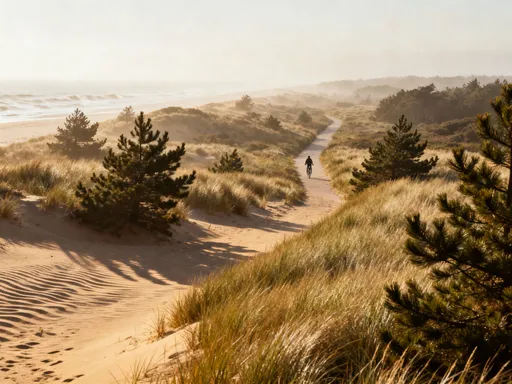
If you’re looking for a sensory immersion in coastal nature, the Kijkduin and Duindigt dune area is an ideal starting point. Located on the city’s western edge, this dynamic landscape marks the transition between land and sea. Here, the North Sea breeze carries the scent of salt and wild herbs, while the terrain shifts beneath your feet—from soft sand to firm-packed trails lined with marram grass. The dunes themselves are constantly evolving, shaped by wind and tides, making each visit slightly different from the last. This is not a manicured park but a living ecosystem, home to specialized plants that stabilize the sand and provide shelter for insects, birds, and small mammals.
Walking through the Kijkduin dunes feels like stepping into a textured painting. In spring, patches of yellow cat’s-foot and purple heather bloom between the dunes. In summer, the light dances across the sand, creating ever-changing shadows. By autumn, the air carries a crispness that invigorates the senses. Throughout the year, you’ll notice the subtle sounds—the rustle of grass, the distant cry of seagulls, the whisper of wind through pine clusters planted to anchor the dunes. These auditory details contribute to a sense of calm, helping visitors disconnect from urban noise and reconnect with natural rhythms.
For those arriving by public transport, the easiest access is via the Kijkduin tram stop, which places you within a ten-minute walk of the dune entrances. Alternatively, cyclists can follow dedicated paths from the city center, enjoying a flat, scenic ride that ends at the edge of the wilderness. Once inside the reserve, multiple trails branch out, allowing for loops of varying lengths. A popular route leads toward the beach, where you can step onto the wide stretch of Langevelderslag and feel the surf under your feet. Others wind deeper into the dunes, offering panoramic views and moments of solitude.
When planning your visit, timing matters. Early mornings and weekdays tend to be quieter, ideal for birdwatching or photography. During weekends and holidays, families often come to fly kites, walk dogs, or enjoy picnics, adding a lively but respectful energy to the area. Weather conditions also influence the experience—strong winds are common, so wearing layers and a windproof jacket is advisable. Sturdy footwear is essential, especially if you plan to explore off the main paths, where loose sand and uneven terrain can make footing tricky. Above all, visitors are encouraged to stay on marked trails to protect fragile vegetation and nesting sites.
Walking Through Westduinpark: A Local’s Secret for Peace
Just a short distance north of Kijkduin lies Westduinpark, a lesser-known gem that offers a more introspective kind of nature experience. While it shares the same dune origins, Westduinpark has a distinct atmosphere—quieter, more wooded, and deeply rooted in local life. It’s the kind of place where you’ll see the same faces week after week: retirees on morning walks, parents pushing strollers along shaded paths, dog owners calling out to their pets near fenced play zones. There’s a sense of community here, a feeling that this space belongs to the neighborhood as much as to the city at large.
The park blends open heathland with dense clusters of pine and birch trees, creating varied microclimates within a compact area. Some trails pass through sunlit clearings where butterflies flit among wildflowers; others wind through cool, shaded corridors where the only sound is the crunch of needles underfoot. Birdlife is abundant—skylarks sing overhead, woodpeckers tap in the distance, and if you’re lucky, you might spot a tawny owl at dusk. Benches are thoughtfully placed at scenic overlooks, inviting pause and reflection. Unlike more tourist-oriented parks, Westduinpark doesn’t have large signage or visitor centers, which adds to its unpretentious charm.
One of the park’s strengths is its connectivity. It borders residential districts like Statenkwartier and Belvedère, making it easily accessible on foot. Several entrances are marked with simple wooden gates, blending into the surroundings. From the northern edge, you can continue eastward into larger green zones, extending your walk into a longer nature circuit. For families, there are playgrounds near the main access points, as well as designated areas for dogs to run freely. The lack of commercial facilities—no cafes or rental kiosks—encourages a slower pace, one focused on presence rather than consumption.
Westduinpark also reflects a deeper cultural attitude toward nature: that it should be available every day, not just on special occasions. Locals don’t treat it as a destination but as part of their routine—a place to clear the mind before work, to walk after dinner, or to find stillness during difficult times. For visitors, spending time here offers insight into Dutch values around balance, privacy, and self-care. It’s a reminder that nature doesn’t have to be dramatic to be meaningful; sometimes, peace is found in simplicity, in the familiar path through the trees, in the rhythm of regular visits that become ritual.
Discovering the Plas van Meijendel: More Than Just a Lake
Stretching across more than 1,000 hectares, the Meijendel nature reserve is one of the largest green spaces in The Hague, and at its heart lies the Plas van Meijendel—a vast freshwater lake that serves both ecological and recreational purposes. Originally formed from sand extraction in the early 20th century, the area was later repurposed for groundwater storage and nature conservation. Today, it functions as a vital water resource while also providing habitat for amphibians, fish, and migratory birds. The lake itself is surrounded by reed beds, wet meadows, and forested dunes, creating a rich mosaic of environments that change with the seasons.
For visitors, Meijendel offers a wide range of activities. The southern shore, near the Langevelderslag beach, is a popular spot for swimming during the summer months. The water is clean, lifeguards are on duty in peak season, and shallow entry points make it family-friendly. Nearby, you’ll find restrooms, changing cabins, and a small kiosk serving drinks and snacks. Cyclists can explore an extensive network of trails that circle the lake and extend into the surrounding dunes. These routes vary in difficulty, from flat, paved paths suitable for children to sandy single tracks that challenge more experienced riders.
One of the most rewarding experiences is watching the light shift over the lake in the late afternoon. As the sun lowers, the water turns gold, reflecting the sky and the silhouettes of passing birds. Herons stalk the edges, kingfishers dart between reeds, and swans glide silently across the surface. Picnic areas are scattered along the banks, many equipped with tables and grills, making it easy to spend a full day outdoors. In spring and early summer, the surrounding heathlands burst into bloom with pink flowering heather, attracting bees and butterflies in large numbers.
What sets Meijendel apart is its dual role—as a working landscape and a public resource. It’s not a pristine wilderness untouched by humans, but a managed environment where ecological health and human use coexist. Water levels are carefully regulated to support both drinking water production and habitat needs. Controlled grazing by sheep and deer helps maintain open areas, preventing forest encroachment. Educational signs along the trails explain these processes, fostering awareness among visitors. The reserve also hosts guided walks and school programs, emphasizing the importance of stewardship. For travelers, this offers a deeper understanding of how cities can sustainably integrate nature into their infrastructure.
Practical Tips for Visiting The Hague’s Natural Areas
To make the most of your visit to The Hague’s natural escapes, a few practical considerations can enhance both comfort and safety. First, transportation: the city’s excellent public transit system makes it easy to reach major access points without a car. Trams and buses serve Kijkduin, Westduinpark, and the edges of Meijendel, with stops located within walking distance of trailheads. However, the most enjoyable way to explore is by bicycle. The Netherlands has over 35,000 kilometers of signed bike paths, and The Hague is fully integrated into this network. You can rent bikes from numerous shops in the city center or use the national OV-fiets program, which allows public transport cardholders to rent bikes at train stations.
When it comes to timing, the best seasons to visit are spring (April to June) and early autumn (September to October). During these periods, temperatures are mild, crowds are smaller, and nature is at its most vibrant. Summer can be pleasant but busy, especially at popular beaches and lakes. Winter visits are possible, though some facilities may be closed, and trails can be muddy after rain. Regardless of season, always check the weather forecast before heading out. The coastal location means wind and sudden showers are common, so packing a waterproof jacket, hat, and extra layers is wise.
Footwear is another key consideration. While paved paths are comfortable in sneakers, many trails in the dunes and forests are sandy or uneven. Sturdy walking shoes with good grip will make your experience safer and more enjoyable. Avoid high heels or open sandals, especially if you plan to venture off main routes. A backpack with water, snacks, and a small first-aid kit is recommended for longer walks. Sunscreen and insect repellent can be useful in warmer months, particularly in wooded or wetland areas.
Navigating the trails is straightforward thanks to clear signage and digital tools. The official Gemeente Den Haag website provides downloadable maps of all major green spaces, and apps like Komoot and Fietsersbond Routeplanner offer real-time routing for cyclists and hikers. These tools include elevation data, surface types, and estimated travel times, helping you plan according to your fitness level and interests. Additionally, the Weerplaza app gives reliable local weather updates, including wind speed and UV index, which are especially helpful for outdoor planning.
Finally, responsible tourism is essential. The Hague’s natural areas are protected for their ecological value, and visitors are expected to respect the rules. Stay on marked paths to avoid damaging vegetation. Do not feed wildlife or leave litter behind. Dogs must be kept on leashes in certain zones, particularly during breeding seasons. Campfires and drones are prohibited. By following these guidelines, you help preserve these spaces for future generations while enjoying them to the fullest.
Reconnecting with Nature, One Trail at a Time
The more time I spent exploring The Hague’s green spaces, the more I realized how deeply nature is woven into the city’s identity. It’s not a decoration or an afterthought—it’s a fundamental part of what makes life here balanced, healthy, and fulfilling. These hidden escapes aren’t just for locals; they’re invitations to travelers seeking a different kind of urban experience. In a world where cities often feel overwhelming, The Hague shows that it’s possible to live close to nature without leaving the conveniences of modern life behind.
What stands out is how accessible and inclusive these spaces are. You don’t need special gear, expert knowledge, or a car to enjoy them. A pair of comfortable shoes and a sense of curiosity are enough. Whether you’re walking through the whispering pines of Westduinpark, watching the sunset over the Plas van Meijendel, or feeling the sea wind in your hair atop the Kijkduin dunes, you’re participating in a tradition of mindful living that values simplicity, sustainability, and connection.
Perhaps the greatest lesson from The Hague is that nature doesn’t have to be far away to be transformative. It can be just beyond the next tram stop, down a quiet path, behind a line of trees. It’s there when you need clarity, when you seek calm, when you want to feel grounded. And in that realization lies an invitation—not just to visit these places, but to seek them out wherever you go. Every city has its hidden green corners, waiting to be discovered. The question is not whether they exist, but whether we choose to step off the pavement and into the wild, even if it’s only for an hour. In that step, we reclaim a part of ourselves that modern life often asks us to forget.