You Won’t Believe These Geneva Viewpoints
Imagine standing where sky meets alpine peaks, with crystal waters reflecting a city so clean it feels unreal. Geneva, Switzerland, isn’t just about polished streets and clocks made of flowers—its true magic lies in perspectives. I’m talking viewpoints that stop your scroll, steal your breath, and make you rethink what travel should feel like. This is not a guidebook dream. It’s real, it’s raw, and you need to see it. More than just a diplomatic capital or a hub of precision watches, Geneva is a city shaped by elevation, light, and reflection—both literal and emotional. To truly know Geneva is to see it from above, beside, and beyond the usual paths.
Why Viewpoints Define the Geneva Experience
Geneva’s identity is inseparable from its geography. Nestled at the southwestern tip of Lake Geneva, where the Rhône River flows out toward France, the city sits in a natural amphitheater framed by the snow-draped Alps to the east and the forested Jura Mountains to the north. This dramatic setting isn’t just scenic—it shapes the rhythm of daily life. Residents wake to mountain views, commute alongside shimmering water, and unwind in parks where the air carries the crispness of alpine winds. For visitors, the city’s most profound moments often come not in museums or boutiques, but on quiet paths where the landscape unfolds in panoramic clarity.
What makes Geneva’s viewpoints so transformative is their ability to offer both beauty and perspective. Standing above the city, you’re not just observing scenery—you’re gaining emotional altitude. The contrast between urban precision and natural grandeur creates a sense of balance, a reminder that civilization and wilderness can coexist with grace. This is especially meaningful for travelers in their 30s to 55s, many of whom seek travel that nourishes the soul as much as it delights the eye. These elevated moments allow space for reflection, for breathing deeply, for reconnecting with what matters beyond daily routines.
Moreover, Geneva’s compact size makes it uniquely accessible for viewpoint exploration. Unlike sprawling metropolises where vistas require long commutes or costly entries, Geneva offers dramatic perspectives within minutes of the city center. Whether by foot, tram, or a short drive, travelers can move from bustling streets to serene overlooks with ease. This accessibility ensures that breathtaking views aren’t reserved for the adventurous few, but available to anyone willing to look up and step slightly off the beaten path. The city rewards curiosity with clarity—both visual and emotional.
The Iconic Spot Everyone Knows (And Why It’s Worth the Hype)
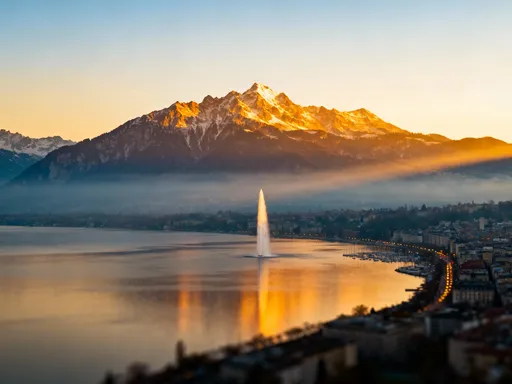
No image of Geneva is more iconic than the Jet d’Eau, the colossal water fountain that erupts 140 meters into the air from the edge of Lake Geneva. Visible from nearly every corner of the city, it serves as a natural landmark, a symbol of Geneva’s harmony between engineering and nature. Located on the eastern tip of the lake where the Rhône flows out, the fountain was originally a pressure release for a hydraulic system in the 1880s but was so admired that it became a permanent feature. Today, it draws millions of visitors each year, many of whom gather along the lakeside promenade to witness its power and grace.
While it’s undeniably crowded during midday, especially in summer, visiting early in the morning transforms the experience. At sunrise, the mist rising from the lake blends with the spray of the Jet d’Eau, creating a soft, dreamlike atmosphere. The light shifts from silver to gold, painting the water in hues that change by the minute. Couples walk hand in hand, photographers adjust their tripods, and solo travelers pause in quiet awe. There’s a shared sense of reverence—a recognition that nature, even when enhanced by human design, can inspire genuine wonder.
The Jet d’Eau isn’t just a spectacle; it’s a meeting point of elements. Water, wind, light, and mountain backdrops converge here in a way that feels almost theatrical. On clear days, the snow-capped peaks of Mont Blanc—Western Europe’s tallest mountain—form a majestic backdrop, making the scene feel larger than life. For many, capturing a photo with the Jet d’Eau and Mont Blanc in the same frame becomes a treasured memento. But even without a camera, the moment lingers: the roar of the water, the cool spray on your face, the vastness of the lake stretching into the horizon. It’s a sensory experience that anchors you in the present.
What makes this viewpoint truly valuable is its accessibility. No ticket, no hike, no special gear is required—just the willingness to show up and look. Families with strollers, elderly couples on benches, children chasing pigeons—all share this space equally. It’s democratic beauty, open to all. And in a world where so many experiences are privatized or commercialized, that simplicity feels refreshing. The Jet d’Eau proves that sometimes, the most memorable travel moments are the most inclusive ones.
A Hidden Hillside Escape with Sweeping City Vistas
Just across the border in France, a short 20-minute bus ride from Geneva’s city center, lies Mont Salève—a modest mountain often called “Geneva’s backyard.” Though technically in French territory, it’s deeply woven into the daily lives of Genevans. Locals hike its trails, paragliders launch from its cliffs, and families picnic at its summit café, all enjoying one of the most breathtaking panoramic views in the region. From the top, the entire city unfolds below, nestled between the lake and the mountains, with the Jet d’Eau rising like a silver needle in the distance.
What sets Mont Salève apart is its combination of accessibility and tranquility. Unlike more famous alpine destinations that require long train rides or expensive cable cars, Mont Salève can be reached by public bus (number 8 from the Acacias stop) and a 30-minute walk or a short cable car ride from the base station in the village of Annemasse. The cable car itself offers rising views, but the real reward comes at the summit. Here, a wide viewing platform faces west, framing Geneva, the lake, and the distant Alps in one sweeping vista. On clear mornings, the city lights still flicker below while the sun rises behind you, turning the landscape into a golden dreamscape.
Hikers will find well-marked trails of varying difficulty, from gentle forest paths to steep rocky ascents. The most popular route, the Chemin des Crêtes (Path of the Ridges), follows the mountain’s spine and offers constantly shifting perspectives—sometimes looking down on the city, sometimes into the deep green valleys of Haute-Savoie. Along the way, wooden signs point out landmarks: Mont Blanc, the Arve River, even the faint outline of the Jura range on the horizon. It’s an immersive experience, one that connects you not just to the view, but to the land itself.
For families or those seeking comfort, the summit café serves hot chocolate, croissants, and local cheese platters, perfect for warming up after a morning hike. Children play on the grassy slopes while parents sip coffee and gaze at the view. Paragliders launch from a designated zone, their colorful canopies drifting down toward the valley like floating petals. The atmosphere is relaxed, unhurried—a world away from the formality of downtown Geneva. It’s the kind of place where time slows, where conversation flows easily, where you feel both energized and at peace.
Lakeside Perspectives: Where Water Meets Urban Elegance
While the high-altitude views are dramatic, Geneva’s true charm often reveals itself at water level. The city’s shoreline is lined with quiet parks, floating piers, and tree-shaded benches that offer intimate, reflective encounters with the lake. These are the spots where travel transforms from sightseeing to savoring. Parc La Grange, one of Geneva’s largest green spaces, stretches along the western bank with manicured lawns, rose gardens, and centuries-old trees. From its eastern edge, you can see the full sweep of the lake with the Alps rising in the distance—a view that feels both grand and gentle.
Further east, near the Jardin Anglais, the atmosphere shifts. Here, the famous flower clock and the illuminated fountain create a postcard-perfect scene, but just a few meters away, the promenade quiets down. Locals walk their dogs, jog at sunset, or sit on benches with books. The water laps gently against the stone embankment, and swans glide by with quiet dignity. At dusk, the city lights begin to sparkle, reflected in the darkening water like scattered stars. It’s a moment of calm that few capitals offer—urban elegance without urban noise.
For a more secluded experience, head to the eastern banks near the Nations district or the Parc des Eaux-Vives. These areas are less crowded, with floating piers that extend into the lake, allowing you to stand surrounded by water. On still evenings, the reflection of the city is so clear it looks like a mirror image. You can sit with your feet dangling above the surface, listening to the soft hum of distant traffic and the occasional call of a waterbird. It’s a meditative experience, one that invites you to slow down and simply be.
These lakeside moments are especially meaningful for travelers seeking balance. After days of museums, meetings, or navigating foreign cities, sitting by the water offers restoration. The lake becomes a metaphor for clarity—its surface smooth, its depths unknown. It reminds us that beauty doesn’t always need to be dramatic; sometimes, it’s found in stillness, in reflection, in the quiet connection between person and place.
Elevated Architecture: Viewing the City from Above
Geneva may not have skyscrapers, but it offers several architectural vantage points that reward the curious traveler. The most historic of these is the tower of St. Pierre Cathedral, a 12th-century Protestant church in the heart of the Old Town. Climbing its 157 narrow stone steps is a modest challenge, but the payoff is immense: a 360-degree view over Geneva’s red-tiled rooftops, winding cobblestone streets, and the distant mountains. From this height, the city feels both ancient and alive, a living tapestry of history and modernity.
The cathedral itself is a landmark of the Reformation, where John Calvin once preached. Standing at the top, you can trace the path of the Reformation Trail, see the Parliament building, and spot the spire of the Russian Orthodox Church. It’s a view that connects geography with history, offering context beyond the visual. You’re not just seeing the city—you’re understanding its layers. Families with older children often enjoy the climb, turning it into a mini-adventure. Binoculars are useful here, allowing you to zoom in on distant details like sailboats on the lake or hikers on Mont Salève.
Another architectural viewpoint is the top floor of the Museum of Art and History, located near the train station. While the museum’s collections are impressive, its upper-level windows offer an unexpected bonus: a clear view of the lake and the Jet d’Eau. Natural light floods the galleries, and during quiet hours, you can stand at the window with a sense of privacy, watching the city breathe. It’s a subtle kind of elevation—one that blends culture with scenery.
For a more modern experience, consider the lobby or upper floors of a lakeside hotel like the Hotel d’Angleterre or the President Wilson. Even if you’re not staying there, many welcome guests to enjoy their lounges or terraces with a coffee or drink. From these vantage points, you can observe the rhythm of the city—the comings and goings of boats, the changing light on the water, the quiet elegance of lakeside life. These spaces blend comfort with perspective, offering a refined way to experience Geneva’s beauty without leaving the urban core.
Sunrise vs. Sunset: Timing Your View for Maximum Impact
The same viewpoint can feel like two different worlds depending on the hour. In Geneva, timing is not just practical—it’s poetic. Sunrise at the Jet d’Eau transforms the scene into something ethereal. The air is cool, the crowds are absent, and the first light paints the mountains in soft rose and lavender tones. Mist rises from the lake like whispers, and the fountain’s spray catches the early glow, creating tiny rainbows. It’s a moment of serenity, ideal for reflection, photography, or simply breathing in the quiet.
Sunset, by contrast, brings drama. As the sun dips behind the Jura Mountains, the lake turns into a sheet of molten gold. The Jet d’Eau becomes a silhouette, backlit by fire, while the city lights begin to flicker on. Couples gather on benches, photographers adjust their settings, and the atmosphere grows romantic. The temperature drops slightly, and a gentle breeze carries the scent of blooming chestnut trees. It’s a time for connection—for sharing stories, holding hands, or watching the world soften into night.
Each moment carries its own emotional weight. Morning light inspires clarity and renewal; evening light evokes warmth and intimacy. For travelers, choosing between them isn’t about preference—it’s about intention. Are you seeking energy or peace? Solitude or togetherness? The beauty of Geneva is that it offers both, often from the same spot. By planning your visit around light, not just location, you elevate the experience from passive viewing to active engagement.
Local photographers often recommend the eastern shore of the lake for sunrise and the western side for sunset—this way, you’re always facing the sun. But even small changes in timing can make a difference. Arriving 30 minutes before sunrise or staying 30 minutes after sunset allows you to witness the full transition, when colors shift and shadows lengthen. These in-between moments, often overlooked, are where magic happens.
How to Find Your Own Unique View (Without Following the Crowd)
The most memorable viewpoints are sometimes the ones not listed in guidebooks. Geneva rewards those who wander with intention. Take a tram to an unfamiliar stop—like Bel-Air or Cité Universitaire—and explore the side streets. You might stumble upon a quiet alley in the Old Town where, between two buildings, a perfect frame of Mont Blanc appears. Or you might find a hidden garden near the University of Geneva, where students read under chestnut trees and the city hums softly in the distance.
Another way to discover unique perspectives is to ask locals. A café owner, a bookseller, or a park ranger might point you to their favorite bench, a quiet pier, or a lesser-known trail. These recommendations often lead to places with no signage, no crowds, no entry fees—just pure, unfiltered beauty. One local might suggest the viewpoint near the Botanical Gardens, where the city skyline blends with treetops. Another might mention the footpath along the Arve River, where wildflowers bloom in spring and the sound of water drowns out traffic.
Children can be excellent guides too. Let them lead you down a path or up a small hill—they often spot beauty adults overlook. A simple game of “Who can find the best view?” turns a walk into an adventure. These personal discoveries become the stories you remember long after the trip: the bench where you shared a chocolate bar, the spot where you watched a heron take flight, the moment you realized you’d found something truly yours.
The key is to stay open. Put the map away sometimes. Look up, not just ahead. Notice the play of light on a wall, the way shadows stretch in the late afternoon, the sudden glimpse of water between buildings. Geneva is a city of subtle surprises, where beauty hides in plain sight. By slowing down and paying attention, you don’t just see the city—you connect with it.
Beyond the Postcard – Why Viewpoints Change Travel
True travel transformation happens not in ticking off landmarks, but in moments of stillness and perspective. Geneva, with its natural drama and quiet elegance, offers more than sights—it offers vision. By seeking out viewpoints, travelers gain not just photographs, but insight. The city becomes not just a place visited, but a feeling carried forward: the crispness of mountain air, the calm of water at dusk, the warmth of sunrise on your face.
These elevated moments do more than please the eye—they restore the spirit. For women in their 30s to 55s, many of whom balance family, career, and personal well-being, travel that nurtures the soul is invaluable. Geneva’s viewpoints offer space to breathe, to reflect, to remember who you are beyond roles and responsibilities. They remind us that beauty exists, that wonder is still possible, that the world is vast and kind.
And perhaps most importantly, they teach us to look up. In a time when so much of life happens on screens, Geneva invites us to lift our eyes—to the mountains, to the sky, to the horizon. It asks us to pause, to be present, to see not just with our eyes, but with our hearts. That shift in perspective doesn’t end when the trip does. It stays with you, like a quiet voice saying: life is beautiful. Look up. Keep looking.