You Gotta See What I Found at Siem Reap’s Hidden Markets
Stepping into Siem Reap feels like opening a treasure chest of culture and flavor. Beyond Angkor Wat, the real magic hides in local markets and quiet alleyways where handmade wonders come to life. I went on a mission to uncover specialty products you won’t find back home—from silks kissed by tradition to spices that explode with flavor. This isn’t just shopping; it’s connecting with Cambodia’s soul, one authentic find at a time. The scent of lemongrass drifts through morning air, children giggle behind fruit stalls, and elders weave stories into every textile they sell. In this city where ancient temples whisper history, the markets speak a different truth—one of resilience, artistry, and daily life. What I discovered wasn’t merely souvenirs but pieces of identity, carefully preserved and proudly shared.
First Impressions: Arriving in Siem Reap with Curiosity
As the plane descends toward Siem Reap, the first glimpse of Cambodia unfolds beneath a golden haze. Rice paddies stretch like patchwork quilts across the countryside, interrupted only by clusters of palm trees and the occasional ox-drawn cart. The air upon stepping outside is thick with humidity and possibility, carrying the faint aroma of charcoal grills and frangipani blossoms. Tuk-tuks buzz past in a symphony of honks and laughter, their drivers waving with warm, open smiles. It’s impossible not to feel the pulse of a place alive with rhythm and warmth.
For many travelers, the silhouette of Angkor Wat at sunrise is the ultimate draw—a vision of serenity carved in stone. But as breathtaking as the temples are, they represent only one layer of Cambodia’s rich identity. After checking into a modest guesthouse near the river, the real journey began not with a map to monuments, but with a quiet determination to wander. The shift from tourist to explorer happens subtly—when you stop asking “What should I see?” and start wondering “Who lives here? What do they make? How do they live?”
This change in mindset transforms an ordinary visit into something deeper. Instead of rushing from temple to temple, I allowed myself to linger in neighborhoods where laundry flaps between wooden homes and where the smell of fish sauce lingers in shaded alleyways. These are the spaces where culture isn’t performed—it’s practiced. And it was in these unassuming corners that I began to notice the quiet craftsmanship embedded in everyday life: a woman hand-stitching a bag, a man carving wooden bowls, children helping fold banana leaves for market sale. Each gesture felt like a thread in a larger tapestry, one that tourists often overlook.
What emerged was a new kind of curiosity—one rooted not in consumption, but in connection. The markets of Siem Reap aren’t just places to buy things; they are living archives of tradition, resilience, and creativity. To walk through them is to witness the heartbeat of a community rebuilding itself with dignity and pride. This realization set the tone for the days ahead, guiding me not toward the most photographed spots, but toward the hidden stalls, family-run workshops, and morning markets where authenticity thrives.
Beyond the Temples: Why Specialty Products Tell a Deeper Story
While Angkor Wat stands as a monument to Cambodia’s grand past, the specialty products found in Siem Reap’s markets speak to its enduring present. These items—handwoven textiles, intricately carved woodwork, naturally dyed fabrics—are more than decorative objects. They are symbols of survival, cultural revival, and national pride. For decades, Cambodia endured conflict and loss, including the devastating impact of the Khmer Rouge regime, which nearly erased entire artistic traditions. In its aftermath, artisans faced the daunting task of rebuilding not just livelihoods, but also cultural memory.
Today, the resurgence of traditional crafts is nothing short of remarkable. Across the country, cooperatives and social enterprises have formed to support artisans, particularly women, in reclaiming ancestral skills. Silk weaving, once nearly lost, has been revived through community-led initiatives that combine historical techniques with sustainable practices. Each pattern tells a story—some inspired by temple carvings, others reflecting nature or spiritual beliefs. When you hold a piece of Cambodian silk, you’re touching a legacy that refused to vanish.
Buying these specialty products is not just about acquiring a beautiful object—it’s an act of participation in cultural preservation. Unlike mass-produced souvenirs made in factories far away, locally crafted goods sustain families, empower communities, and keep traditions alive. This form of travel, often called sustainable or ethical tourism, emphasizes respect, awareness, and long-term impact. It shifts the focus from what we take home to what we leave behind: fair wages, mutual understanding, and support for local economies.
Moreover, these products reflect a deep connection to the land. Natural dyes are extracted from roots, bark, and leaves; palm sugar is harvested from wild palms; clay pottery is shaped using centuries-old methods. There’s a mindfulness in the making, a rhythm tied to seasons and community. By choosing to purchase such items, travelers contribute to a system that values quality over quantity, people over profit, and heritage over trend. In this way, every purchase becomes a small but meaningful investment in Cambodia’s future—one woven scarf, one hand-carved spoon at a time.
Psar Chaa (Old Market): Where Tradition Meets Daily Life
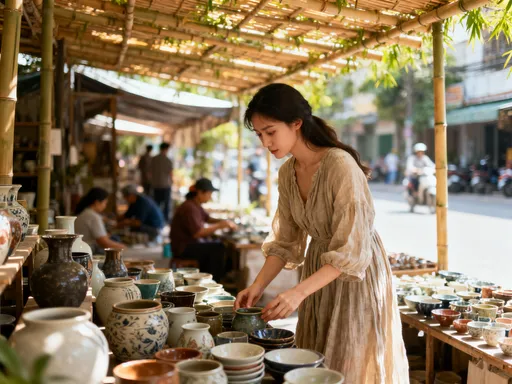
No visit to Siem Reap is complete without a morning stroll through Psar Chaa, the city’s historic Old Market. Long before the first temple tour begins, vendors are already arranging their wares beneath colorful tarps and bamboo awnings. The market pulses with energy—fishermen lay out glistening catfish on ice, farmers stack pyramids of mangoes and dragon fruit, and spice sellers display mounds of turmeric, galangal, and dried chilies in vibrant hues. This is not a market designed for tourists; it’s where locals shop, barter, and begin their day.
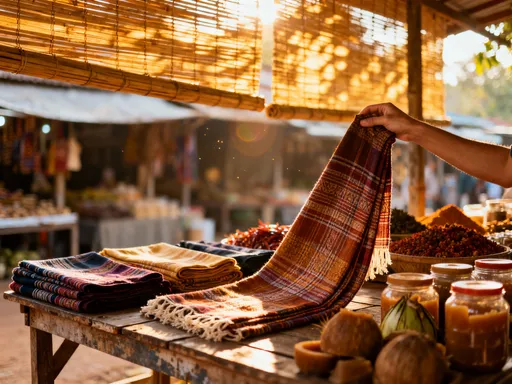
Wandering through the narrow aisles, one is struck by the sheer variety of goods. Beyond food, the market offers an array of handmade crafts that reflect Cambodia’s artistic heritage. Among the most iconic is the krama—a checked cotton scarf worn by nearly every Cambodian, from farmers to city dwellers. Traditionally used for sun protection, carrying goods, or even as a baby sling, the krama has become a symbol of national identity. In Psar Chaa, vendors sell them in dozens of colors and patterns, many still produced using handlooms in rural villages.
Another standout is palm sugar, harvested from the sap of sugar palm trees. Unlike refined white sugar, it has a deep caramel flavor and is often sold in round cakes wrapped in banana leaves. Watching a vendor break off a piece with a machete is a small ritual in itself—one that connects modern consumers to centuries of agricultural tradition. Silverware is also widely available, with artisans shaping spoons, bowls, and decorative items using techniques passed down through generations.
For visitors, navigating Psar Chaa can be both exhilarating and overwhelming. To shop respectfully, it’s important to observe local customs. Bargaining is common but should be done with kindness, not aggression. A smile and a polite “Is this the best price?” go much further than demanding discounts. To identify authentic handmade items, look for slight imperfections—uneven stitching, natural color variations, or hand-carved details. These are not flaws; they are signs of human touch in an age of mass production. Above all, approach the market not as a shopper, but as a guest. Ask questions, learn names, and take time to appreciate the stories behind the goods. In doing so, you transform a simple transaction into a moment of shared humanity.
Artisan Workshops: Meeting the Makers Behind the Magic
One of the most profound experiences during my time in Siem Reap was visiting a silk farm in Takeo Province, a few hours’ drive south of the city. Nestled among rice fields and quiet villages, the cooperative operates on principles of sustainability, education, and women’s empowerment. Here, silk is not mass-produced in sterile factories but nurtured from cocoon to cloth in full view of the natural world. The journey begins with the humble mulberry tree, whose leaves feed silkworms in carefully monitored sheds. After about 25 days, the worms spin their cocoons, which are then gently harvested for processing.
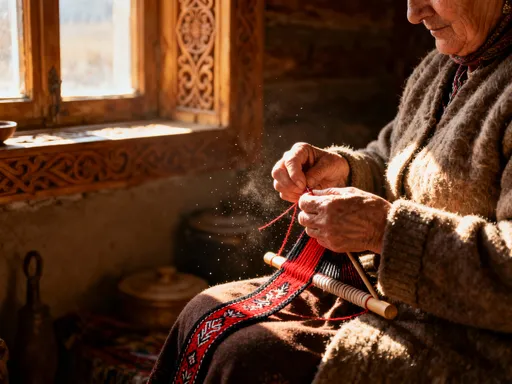
The transformation from cocoon to fabric is a meticulous, labor-intensive process. First, the cocoons are boiled to soften the silk threads, which are then carefully unwound—sometimes revealing strands over 900 meters long. These threads are spun, dyed, and woven on traditional wooden looms by skilled artisans, many of whom are women trained through the cooperative. What makes Cambodian silk unique is its use of the ikat technique, in which threads are tied and dyed before weaving to create intricate, blurred patterns. The result is a fabric that shimmers with depth and movement, each piece slightly different due to the hand-dyeing process.
What struck me most was the pride these artisans took in their work. One weaver, Srey Mom, shared how she learned the craft from her grandmother and now teaches it to her daughters. “This is not just a job,” she said. “It is our history, our way of speaking without words.” The cooperative ensures fair wages, healthcare access, and flexible hours so women can care for their families while earning independently. By supporting such initiatives, travelers help sustain not only livelihoods but also intergenerational knowledge.
Visiting the workshop allowed me to see the human cost and beauty behind every silk scarf sold in the market. It transformed my understanding of value—from price to process, from object to origin. When I later purchased a piece of silk in Siem Reap, I didn’t just see a souvenir; I saw hours of labor, centuries of tradition, and a woman’s quiet determination to preserve her culture. These are the moments that elevate travel from sightseeing to soul-seeing.
Hidden Gems: Off-the-Beaten-Path Stalls You Won’t Want to Miss
Beyond the main market aisles, Siem Reap’s true treasures often lie in unmarked stalls and quiet corners. One afternoon, while exploring a narrow lane behind Pub Street, I stumbled upon a tiny shop run by an elderly couple. Inside, hanging from strings like delicate jewelry, were bracelets made from lotus thread—a rare and ancient craft. The process involves extracting fine fibers from lotus stems, twisting them into thread, and weaving them by hand. Each bracelet takes days to complete and is incredibly lightweight, almost floating on the skin. The woman explained that lotus thread symbolizes purity and resilience—qualities deeply respected in Cambodian culture.
Another unforgettable discovery was prahok, Cambodia’s famous fermented fish paste. At first glance, it may seem intimidating—sold in small clay jars with a pungent aroma—but it’s a cornerstone of Khmer cuisine. Locals use it to season soups, curries, and dipping sauces, adding a deep umami flavor that no other ingredient can replicate. A vendor at a morning market invited me to taste a small sample mixed with chili and lime. The flavor was bold, earthy, and surprisingly addictive. She laughed as I reached for another bite, then wrapped a jar for me to take home. Now, whenever I cook with it, I’m transported back to that sunlit market stall and the generosity of a stranger.
Perhaps the most delightful surprise was finding locally roasted coffee blends infused with palm sugar and cardamom. Unlike the strong, bitter brews common in Western cafes, these blends offer a smooth, slightly sweet profile that reflects Cambodian taste preferences. Sold in small paper bags by independent roasters, they make perfect gifts for coffee lovers. One vendor explained how his family has been roasting beans over wood fires for decades, using a blend of Arabica and Robusta grown in the Cardamom Mountains. “We don’t make coffee to sell,” he said. “We make it to share.”
These hidden gems are not just products—they are invitations to engage. They ask us to slow down, to listen, to try something unfamiliar. In a world where travel can feel rushed and superficial, these moments of discovery restore a sense of wonder. They remind us that the best souvenirs aren’t the ones we plan to buy, but the ones we stumble upon with an open heart.
Smart Shopping: How to Choose Quality Without Overpaying
With so many beautiful items on offer, it’s natural to want to bring a piece of Siem Reap home. However, distinguishing between authentic handmade goods and mass-produced imitations requires attention and awareness. One key indicator is texture and weight. Handwoven textiles often feel slightly irregular, with subtle variations in thickness or color. In contrast, machine-made fabrics tend to be uniform and overly smooth. Similarly, hand-carved woodwork will show tool marks and natural grain patterns, while factory-made items may feel too light or plastic-like.
Another tip is to observe the vendor. Artisans who make their own goods are usually happy to explain their process, show tools, or even demonstrate a technique. If someone cannot describe how an item was made or avoids eye contact when asked, it may be resold rather than handmade. Additionally, prices that seem too low—such as $5 for a silk scarf—are often a red flag. Genuine Cambodian silk requires months of labor and high-quality materials; a fair price reflects that effort.
The best time to visit markets is early in the morning, ideally between 6:00 and 8:30 a.m. This is when fresh produce arrives, artisans set up their stalls, and the atmosphere is calmest. Later in the day, especially in the afternoon, crowds increase, and some vendors may run low on stock. Visiting early also allows for more relaxed conversations and better photo opportunities without cluttered backgrounds.
Equally important is ethical awareness. Avoid products made from endangered materials, even if they appear legal. This includes ivory-like carvings (often made from bone or synthetic substitutes), wild animal skins, or coral jewelry. While some vendors may claim these are “fake,” demand fuels illegal trade. Instead, focus on sustainable alternatives—bamboo crafts, recycled paper goods, or plant-based dyes. By making conscious choices, travelers help protect Cambodia’s biodiversity while supporting responsible artisans.
Bringing Siem Reap Home: Turning Finds into Meaningful Keepsakes
The true value of a souvenir isn’t measured by its price, but by the memories and meanings it carries. The krama scarf I bought in Psar Chaa now hangs by my kitchen door, used weekly to carry groceries or wrap bread. Each time I touch it, I remember the vendor who folded it with care and wished me safe travels. The lotus thread bracelet rests in a small wooden box, brought out on special occasions—not as jewelry, but as a reminder of resilience and quiet beauty. Even the jar of prahok, though used sparingly, adds a taste of Cambodia to my cooking, sparking conversations with friends who ask, “Where did you get this?”
These items do more than decorate a shelf—they keep a connection alive. When I light a stick of Cambodian incense bought from a temple vendor, the sandalwood scent fills the room, and for a moment, I’m back on a quiet morning walk, monks in saffron robes passing by. The silk scarf draped over a chair isn’t just fabric; it’s a story of women weaving history into every thread. These objects serve as daily anchors to a journey that changed how I see travel—not as a checklist of sights, but as a series of human encounters and cultural exchanges.
More importantly, each purchase continues to support the communities that made them. When you buy from a cooperative, a family-run stall, or a social enterprise, your money goes directly to those who need it most. It helps send children to school, pay for medical care, and preserve traditions at risk of fading. In this way, travel becomes a cycle of giving and receiving, where every choice has a ripple effect.
As I reflect on my time in Siem Reap, I realize that the temples will always be there—majestic, enduring, and awe-inspiring. But it was the markets, the makers, and the quiet moments of connection that left the deepest impression. They taught me that the soul of a place isn’t found in grand monuments alone, but in the hands that shape its crafts, the voices that share its stories, and the hearts that welcome strangers with openness. So the next time you travel, don’t just look for landmarks. Seek out the hidden stalls, ask questions, and let yourself be surprised. Because sometimes, the greatest treasures aren’t carved in stone—but held in the palm of a weaver’s hand.