A Private Feast Among the Ruins: Dining Secrets at Chichen Itza
You know that feeling when history and flavor collide in the most unexpected way? At Chichen Itza, Mexico, I discovered a side of the ancient world I never imagined—private, intimate dining experiences tucked between stone pyramids and jungle shadows. This isn’t your average tourist meal. It’s a curated journey of taste and atmosphere, where Mayan heritage meets modern luxury. If you think archaeology and fine dining don’t mix, think again—this is something entirely different.
The Allure of Chichen Itza Beyond the Tour Groups
Each day, thousands of visitors stream through the entrance of Chichen Itza, cameras in hand, eager to witness one of the New Seven Wonders of the World. The midday sun beats down on limestone pathways as tour guides raise their colorful flags, leading groups past El Castillo, the Temple of the Warriors, and the Great Ball Court. While awe-inspiring, these peak-hour visits often feel more like a historical procession than a personal encounter with the past. The true magic of Chichen Itza, however, reveals itself only when the crowds thin and the golden light of dusk settles over the ruins.
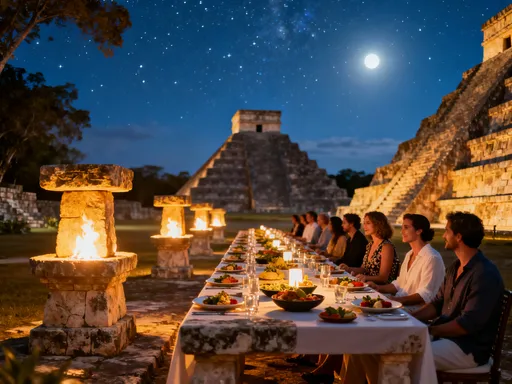
After the last shuttle bus departs and the final echo of tourist chatter fades into the Yucatán jungle, a profound stillness descends. This is when the site transforms. Torches flicker to life along ancient walkways. The silhouette of El Castillo rises like a sentinel against a violet sky. The air, once thick with heat and noise, now carries the soft rustle of leaves and the distant call of nocturnal birds. For a select few, this moment marks the beginning of an extraordinary experience: a private dinner among the ruins—one that blends reverence, exclusivity, and sensory delight.
These after-hours access events are carefully regulated to preserve the integrity of the UNESCO World Heritage site. Organized in collaboration with local authorities and cultural stewards, they are not open to the general public. Participation is by invitation or through specialized travel curators who work closely with heritage institutions. The shift from daytime tourism to nighttime immersion allows guests to engage with Chichen Itza not as spectators, but as quiet witnesses to a living legacy. It is in this hushed, candlelit environment that history feels less like a relic and more like a conversation.
Why Specialty Dining Here Feels So Unique
Dining at Chichen Itza is not simply about food—it is about context, continuity, and connection. Unlike a typical fine dining experience in a city restaurant, a meal here unfolds against a backdrop of over a thousand years of Mayan civilization. Every bite is framed by the presence of ancient architecture, celestial alignments, and spiritual symbolism. The experience is designed to awaken not just the palate, but the imagination.
What makes these meals truly distinctive is their deep cultural grounding. The menus are not invented for spectacle; they are rooted in archaeological evidence, ethnobotanical research, and oral traditions passed down through generations. Ingredients like maize, beans, squash, achiote, and cocoa—staples of the pre-Columbian diet—are reimagined with contemporary culinary techniques, creating dishes that honor the past while appealing to modern sensibilities. A dish of slow-roasted cochinita pibil, marinated in citrus and achiote, might be served in the same courtyard where such feasts once honored the rain god Chaac.
Each course is accompanied by a narrative, often delivered by a cultural guide or historian, that explains the significance of the ingredients, the rituals associated with ancient Mayan banquets, and the astronomical knowledge embedded in the site’s design. The dining experience becomes a form of storytelling—one that engages multiple senses. The clink of handmade pottery, the aroma of wood smoke, the taste of freshly ground cacao in a spiced chocolate drink—all contribute to a journey that transcends time.
This fusion of gastronomy and heritage creates a rare kind of authenticity. It is not reenactment, nor is it performance for entertainment’s sake. Instead, it is a respectful dialogue between past and present, where food serves as the language of memory and continuity.
How Private Dinners Are Curated: A Behind-the-Scenes Look
Organizing a private dinner at Chichen Itza is a complex endeavor that requires coordination among multiple stakeholders. The process begins months in advance, with travel designers and cultural experience companies submitting proposals to the Instituto Nacional de Antropología e Historia (INAH), the Mexican government body responsible for preserving archaeological sites. These proposals must demonstrate a commitment to conservation, cultural sensitivity, and minimal environmental impact.
Once approved, a team of chefs, historians, archaeologists, and local artisans begins crafting the experience. The menu is developed through extensive research into Mayan foodways, including residue analysis from ancient cooking vessels and historical accounts from early Spanish chroniclers. Chefs collaborate with agricultural cooperatives in the Yucatán Peninsula to source ingredients that are both authentic and sustainably grown. For example, corn used in the meal may come from native heirloom varieties cultivated using traditional milpa farming methods.
The logistics are equally meticulous. All equipment, from tables and chairs to lighting and kitchen setups, must be transported in and out without touching or damaging any archaeological structures. Temporary installations are designed to be low-impact, using soft ground cloths and elevated platforms. Lighting is kept subtle—torches, lanterns, and low-wattage LEDs—to preserve the site’s nocturnal ambiance and protect nocturnal wildlife.
Sustainability is a guiding principle. Compostable serveware made from plant fibers is used throughout, and all waste is removed from the site. Water usage is minimized, and any cooking is done off-site to prevent smoke or odor from lingering on the ruins. These measures ensure that the experience remains respectful of both the cultural and ecological significance of Chichen Itza.
Perhaps most importantly, the curation process includes consultation with local Mayan communities. Elders and cultural leaders are invited to review the program, offering guidance on appropriate rituals, language, and symbolism. This collaborative approach ensures that the experience is not an appropriation of culture, but a celebration led by those who carry its living traditions.
An Evening Unfolded: A Scene-by-Scene Experience
Imagine arriving at Chichen Itza just as the sun dips below the jungle canopy. You are greeted at a discreet entrance by a host in traditional Yucatecan attire, who offers you a welcome drink—a chilled hibiscus and lime agua fresca served in a hand-carved gourd. As you sip, you walk along a torch-lit path toward El Castillo, its stepped pyramid glowing in the warm light. The air is cool now, carrying the faint scent of copal resin, which has been burned in a small offering nearby.
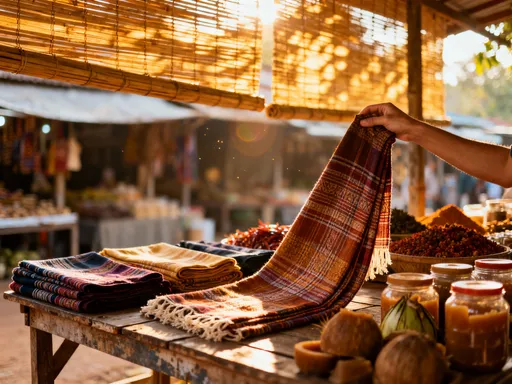
Your first course is served in the Plaza of a Thousand Columns. Here, low tables are arranged beneath a canopy of stars, with cushions for seating and woven textiles beneath your feet. A trio of local musicians plays ancient melodies on wooden flutes and turtle-shell drums, their rhythms echoing softly against the stone. The dish: a delicate ceviche of local snook, marinated in bitter orange juice, garnished with edible flowers and served with crispy blue corn totopos. As you eat, a guide explains how the Mayans valued seafood even in inland regions, transporting it via trade networks that spanned the peninsula.
The second course moves you to the Temple of the Warriors, where a fire pit casts dancing shadows on the carved columns. Here, you are served a slow-cooked tamal de chipilín—a steamed masa cake filled with chaya and wild greens, wrapped in banana leaves. The chef joins the table to describe how the recipe was adapted from a 16th-century manuscript, with ingredients foraged from nearby forests. A small blessing is offered in Yucatec Maya by a community elder, acknowledging the earth and ancestors before the meal continues.
Dessert is presented in the Great Ball Court, the largest of its kind in Mesoamerica. Under a canopy of string lights disguised as fireflies, guests are served a spiced chocolate mousse with toasted pumpkin seeds and a drizzle of honey from native stingless bees. As you taste the rich, slightly bitter cacao—once considered a divine gift—you learn how the Mayans used chocolate in rituals, as currency, and as a drink for nobility. A brief astronomical presentation follows, pointing out how the site’s alignment with Venus and the solstices reflects the Mayans’ sophisticated understanding of the cosmos.
The evening concludes with a ceremonial offering of flowers and copal at the base of El Castillo. Guests are invited to write a personal intention on a piece of amate paper and place it in a woven basket, symbolizing a connection between the past and their own journey. As you depart, the ruins recede into the night, but the sense of reverence lingers.
Choosing the Right Experience: What to Know Before You Book
Private dining experiences at Chichen Itza are not standardized, and not all offerings are created equal. Some are intimate gatherings for just 12 guests, while others may accommodate small groups of up to 30. There are also rare opportunities for full-site buyouts, typically reserved for special occasions or high-end cultural tours. The key is to choose an experience that prioritizes authenticity, sustainability, and cultural respect over spectacle.
Pricing varies widely depending on the scope of the event. A curated tasting dinner with four courses and cultural narration may start around $300 per person, while a fully immersive evening with transportation, accommodations, and extended programming can exceed $1,000. These prices reflect not just the culinary experience, but the extensive permissions, staffing, and conservation protocols required to operate at the site.
Booking should be done at least three to six months in advance, especially during peak travel seasons like winter holidays or spring break. It is advisable to work with reputable travel curators or luxury tour operators who have established relationships with INAH and local communities. Look for operators who transparently share their cultural partnerships, sourcing practices, and conservation commitments.
When preparing for the evening, dress is semi-formal with a cultural touch—light linen or cotton clothing in neutral tones, comfortable yet elegant footwear suitable for walking on uneven ground. A light shawl or jacket is recommended, as temperatures can drop after sunset. Cameras are permitted, but flash photography is restricted to protect the site and maintain the ambiance. Most importantly, approach the experience with an open heart and a spirit of humility—this is not a show, but a privilege.
Beyond the Plate: Connecting with Mayan Culture
What elevates these dinners from remarkable meals to transformative experiences is their emphasis on cultural connection. The food is only one thread in a larger tapestry that includes language, music, ritual, and knowledge. Guests are not passive diners; they are participants in a living tradition.
Many experiences incorporate moments of cultural exchange. A local elder might share a blessing in Yucatec Maya, explaining how food is a form of gratitude to the earth. A historian might point out the sacred geometry of the site, showing how the number of steps on El Castillo corresponds to the days in the Mayan calendar. A farmer might describe how chaya, a nutrient-rich leafy green, has been cultivated for centuries and is now being revived as a superfood.
Ingredients are presented not just as components of a dish, but as carriers of history. Achiote, the vibrant red seed used to color and flavor meats, was once used in body paint and religious ceremonies. Cacao, revered as the food of the gods, connects diners to a lineage of spiritual and economic significance. Even the water served may come from a cenote—a natural sinkhole sacred to the Mayans—reminding guests of the deep relationship between the people and the land.
These elements transform the meal into an act of remembrance and respect. They encourage guests to reflect on their own relationship with food, heritage, and the natural world. In a time when tourism is often criticized for being extractive, these experiences model a different path—one where visitors give as much as they receive, where cultural knowledge is honored, and where the past is not displayed, but lived.
Final Thoughts: Why This Changes How You See Travel
A private dinner at Chichen Itza is more than a luxury indulgence—it is a reimagining of what travel can be. In an age of fast tourism, where destinations are checked off lists and experiences are filtered for social media, this kind of journey invites slowness, depth, and intentionality. It asks travelers to pause, to listen, and to engage with a culture on its own terms.
By combining heritage, gastronomy, and exclusivity, these experiences offer a powerful alternative to conventional tourism. They demonstrate that wonder does not have to come at the expense of respect, and that luxury can be measured not in price, but in meaning. To dine among the ruins is to feel the weight of centuries, to taste the persistence of tradition, and to recognize that the past is not behind us, but around us.
For the thoughtful traveler—especially those who value authenticity, cultural insight, and transformative moments—Chichen Itza’s private dining experiences represent a new standard. They remind us that the most memorable journeys are not those that take us farthest, but those that bring us closest: to history, to humanity, and to ourselves. In the quiet glow of torchlight, with the stars above and ancient stones beneath your feet, you may find that the true feast was never just on the plate—but in the connection it made possible.