How I Found Calm Through Qigong: A Real Journey in Emotional Balance
For years, I struggled with stress and emotional ups and downs, always searching for something that truly helped. Then I discovered qigong—not as a quick fix, but as a daily practice that slowly changed how I feel inside. It’s not magic, just mindful movement and breath. Over time, I noticed fewer mood swings, deeper calm, and better focus. This is my story of using traditional Chinese wisdom to manage emotions in a modern world. What began as curiosity became a lifeline—a gentle, consistent way to steady my mind, soften my reactions, and reclaim a sense of inner balance. In a time when so much feels out of control, qigong offered something rare: a quiet, reliable space within myself.
The Emotional Rollercoaster: Why Modern Life Drains Our Inner Peace
Life today moves fast. Responsibilities pile up—managing households, supporting children, caring for aging parents, and often trying to maintain a career—all while staying connected to a world that never stops sending messages, alerts, and demands. For many women between 30 and 55, this constant juggling act becomes a source of chronic stress. Emotional exhaustion isn’t just a feeling; it’s a real condition that wears down mental resilience over time. Irritability, difficulty concentrating, sleep disturbances, and a sense of being emotionally reactive are common signs that the nervous system is overwhelmed. The body, designed for short bursts of stress followed by rest, is now stuck in a near-constant state of low-grade alert.
This emotional imbalance doesn’t only affect mood—it impacts physical health. When stress hormones like cortisol remain elevated, they can disrupt digestion, weaken immunity, and contribute to fatigue. Many women report feeling “wired but tired,” caught between the need to keep going and the body’s quiet plea for rest. In search of relief, people often turn to quick fixes: scrolling through social media, reaching for sugary snacks, or relying on caffeine to push through the day. While these may offer temporary distraction, they don’t address the root cause of emotional strain. In fact, they can sometimes deepen the cycle of imbalance by further agitating the nervous system.
What’s missing is a sustainable way to reset—something that doesn’t require expensive treatments or drastic lifestyle changes. There’s a growing interest in holistic approaches that support emotional wellness without medication. Practices like mindfulness, breathwork, and gentle movement are gaining attention for their ability to foster long-term stability. Among these, qigong stands out as a time-tested method that combines physical ease with mental clarity. Unlike intense workouts that can add to physical stress, qigong works with the body’s natural rhythms to restore calm. It’s not about pushing harder; it’s about learning how to slow down, tune in, and allow the system to rebalance.
What Is Qigong? Unpacking the Ancient Practice Behind Emotional Harmony
Qigong (pronounced “chee-gong”) is a mind-body practice that has been part of traditional Chinese culture for thousands of years. At its core, it involves gentle physical movements, coordinated breathing, and focused attention—all designed to cultivate and balance Qi, the vital energy believed to flow through the body. The word “qigong” itself comes from two parts: “Qi,” meaning life force or energy, and “gong,” meaning cultivation or practice. Together, qigong means “energy cultivation.” While it may sound abstract, the experience of qigong is deeply practical. It’s something you feel in your body—a sense of warmth, tingling, or lightness that arises when you move slowly and breathe with intention.
Rooted in Traditional Chinese Medicine (TCM), qigong is based on the idea that health depends on the smooth, balanced flow of energy through pathways called meridians. When Qi becomes blocked or depleted, it can lead to physical discomfort or emotional distress. Qigong exercises are designed to unblock and strengthen this flow, supporting both physical vitality and emotional well-being. Unlike high-intensity fitness routines, qigong emphasizes softness, awareness, and repetition. Movements are slow and flowing, often mimicking natural elements like water, wind, or trees swaying in the breeze. This gentle rhythm helps calm the nervous system, making it especially helpful for those who feel overstimulated or emotionally drained.
While qigong shares some similarities with yoga and meditation, it has its own unique qualities. Yoga often focuses on postures and flexibility, while meditation typically emphasizes stillness and mental focus. Qigong bridges the two—it’s moving meditation. The continuous, flowing motions keep the body engaged while the breath and attention remain centered. This combination makes it accessible to people of all fitness levels, including those with joint sensitivity or limited mobility. Because it doesn’t require special equipment or a lot of space, it can be practiced at home, in a quiet corner, or even outdoors in a park. For busy women who may not have hours to dedicate to self-care, qigong offers a realistic way to nurture emotional balance in small, meaningful moments.
The Science Behind the Stillness: What Research Says About Qigong and Mood
While qigong has ancient roots, modern science is beginning to validate its benefits for emotional health. Numerous peer-reviewed studies have explored how qigong affects the body’s stress response. Research shows that regular practice can lead to measurable reductions in cortisol, the primary stress hormone. One study published in the Journal of Psychosomatic Research found that participants who practiced qigong for eight weeks reported significantly lower levels of anxiety and perceived stress compared to a control group. Another study in the American Journal of Chinese Medicine observed improvements in heart rate variability (HRV), a key indicator of nervous system resilience. Higher HRV is associated with better emotional regulation and the ability to adapt to stress.
One of the main reasons qigong works so well for emotional balance is its effect on the autonomic nervous system. The slow, rhythmic breathing that accompanies qigong movements activates the parasympathetic nervous system—the “rest and digest” mode. This counteracts the “fight or flight” response that so many people live in due to modern stressors. When the parasympathetic system is engaged, the heart rate slows, muscles relax, and the mind becomes clearer. This physiological shift creates the internal conditions for emotional calm. It’s not about suppressing emotions; it’s about creating space so they can be felt and processed without overwhelm.
Clinical observations also support qigong’s role in building emotional resilience. Therapists and integrative health practitioners have noted that patients who incorporate qigong into their routines often report feeling more grounded, less reactive, and better able to manage daily challenges. While qigong is not a substitute for professional mental health treatment, it can be a powerful complementary tool. For women navigating hormonal changes, caregiving stress, or life transitions, having a daily practice that supports emotional regulation can make a meaningful difference. The beauty of qigong lies in its simplicity—no special skills are needed, just a willingness to show up and breathe with awareness. Over time, this small act of presence builds a foundation of inner strength.
Emotions and Energy: How Chinese Wisdom Maps Feelings to the Body
Traditional Chinese Medicine offers a unique perspective on the connection between emotions and physical health. According to TCM, each major organ system is linked to a specific emotion. For example, the liver is associated with anger, the heart with joy, the spleen with worry, the lungs with grief, and the kidneys with fear. These connections aren’t symbolic—they reflect the belief that emotional experiences directly affect the flow of Qi in the body. When emotions are prolonged or suppressed, they can create blockages or imbalances in the corresponding organs. Over time, this may manifest as physical discomfort or emotional instability.
Consider how stress “sits” in the body. Many women report tightness in the shoulders, a clenched jaw, or a knot in the stomach during times of emotional strain. In TCM, these sensations are seen as signs of stagnant Qi—energy that’s not moving freely. Similarly, when someone carries unresolved grief, they may feel a heaviness in the chest, which aligns with the lungs’ emotional association. Qigong addresses these patterns by using specific movements and breathing techniques to release tension and restore energy flow. For instance, sweeping arm motions can help clear stagnation in the liver, while deep abdominal breathing supports the lungs and calms grief-related tension.
The practice doesn’t require you to analyze your emotions intellectually. Instead, it works through the body. As you move and breathe, you create internal shifts that allow emotional energy to circulate more freely. This is why many people notice a change in their mood after just a few minutes of qigong—even if they didn’t set out to “work on” an emotion. The body begins to let go, and with it, the mind softens. Over time, regular practice helps build emotional agility—the ability to experience feelings without being overwhelmed by them. It’s not about becoming numb or detached; it’s about developing a healthier relationship with your inner world, one breath at a time.
My Routine: Simple Qigong Practices That Actually Work for Emotional Balance
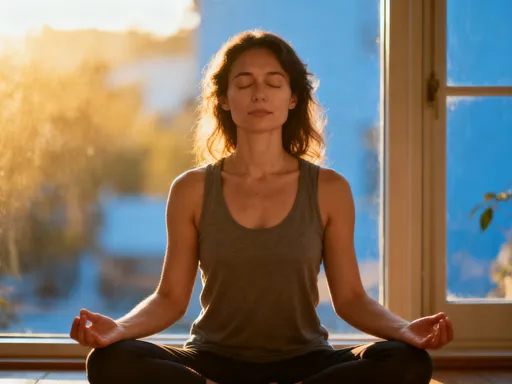
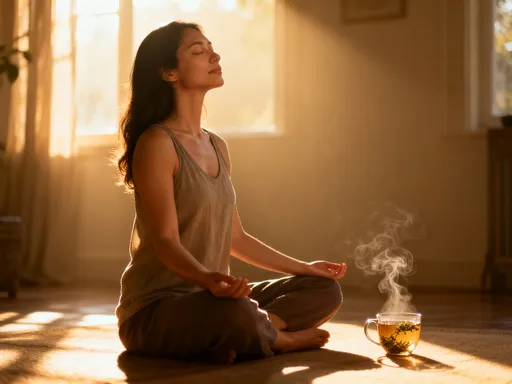
My qigong journey began with just five minutes a day. I started in the morning, before the house woke up, standing in my living room in soft clothes with bare feet on the floor. The first exercise I learned was called “Lifting the Sky.” It’s simple: inhale as you slowly raise your arms in front of you and overhead, as if gathering energy from the earth and reaching toward the sky. Then exhale as you lower your hands back down, palms facing the body. This movement creates a gentle stretch through the spine and helps regulate the flow of Qi. I noticed that after doing it a few times, my breathing deepened and my shoulders relaxed. It became a signal to my body that it was time to shift from sleep mode to calm wakefulness.
Another practice I rely on is “Separating Heaven and Earth.” In this movement, one hand rises above the head, palm facing up, while the other hand sinks below the hip, palm facing down. You gently shift your weight from side to side, imagining a connection between the sky and the earth. This exercise promotes grounding and balance—qualities I often felt were missing when I was emotionally reactive. On days when I felt scattered or overwhelmed, just three minutes of this movement helped me feel more centered. I began to see it as a way of “resetting” my emotional compass, especially before entering a busy part of the day.
One of the most transformative practices I’ve adopted is the “Microcosmic Orbit” breathing technique. It’s not a movement, but a visualization combined with breath. You inhale deeply into the lower abdomen, then imagine the breath traveling up the spine and over the head, down the front of the body, and back to the belly. This creates an energy loop that many practitioners say enhances mental clarity and emotional stability. I use it when I need to calm my thoughts before bed or during moments of decision-making. It doesn’t take long—just five to ten cycles can make a difference. What matters most is consistency. I’ve learned that perfection isn’t the goal. Some days, my mind is busy, and I lose focus. But showing up is what counts. Over time, these small efforts have added up to real change.
Beyond the Mat: Integrating Qigong Principles Into Daily Life
One of the most valuable lessons qigong has taught me is that mindfulness doesn’t have to be confined to a formal practice. The principles of breath, posture, and awareness can be carried into everyday moments. For example, I’ve started pausing before reacting in stressful situations—like when the kids are arguing or a plan falls through. Instead of responding immediately, I take one slow breath. That simple act creates space between stimulus and response, allowing me to choose how I react. It’s a small shift, but it’s made a big difference in my relationships and my sense of control.
I’ve also incorporated mini-practices throughout the day. While sitting at my desk, I’ll place my hands on my lower abdomen and take three deep breaths, feeling the rise and fall of my belly. During a walk, I’ll pay attention to the rhythm of my steps and the air on my skin. Before sleep, I do a quick body scan, checking in with each part of my body and releasing tension. These moments of presence add up. They remind me that emotional balance isn’t something I achieve once and keep forever—it’s something I nurture daily, in small, intentional ways.
Posture has also become a quiet tool for emotional reset. I’ve noticed that when I slump or hold tension in my chest, my mood tends to follow. By gently aligning my spine and opening my shoulders, I signal to my body that I am safe and grounded. This physical adjustment often leads to a mental shift. I feel more capable, more present. Qigong has helped me see that emotional well-being isn’t just about thinking positively—it’s about living from the body outward. When the body feels balanced, the mind follows. This integration of mind, breath, and movement has become a lifestyle, not just a practice.
Realistic Expectations: What Qigong Can (and Can’t) Do for Your Emotions
It’s important to be honest: qigong is not a cure-all. It won’t erase deep-seated trauma or replace professional therapy for clinical anxiety or depression. What it offers is a supportive practice—a way to build emotional resilience and create moments of calm in an unpredictable life. Progress is gradual. There are days when I feel the benefits clearly, and others when I barely notice a difference. But over time, the cumulative effect has been undeniable. I’m less reactive, more patient, and better able to navigate emotional waves without getting pulled under.
One common misconception is that qigong is about emptying the mind or achieving a state of bliss. That’s not the goal. The practice is about awareness, not perfection. Thoughts will come and go. Emotions will rise and fall. The point is to observe them with kindness and return to the breath. This gentle approach makes qigong sustainable, especially for women who already carry so much responsibility. It doesn’t demand more energy—it helps conserve and restore it.
If you’re dealing with significant emotional challenges, it’s always wise to consult a healthcare provider. Qigong can complement professional care, but it shouldn’t replace it. That said, for everyday stress, mood swings, or the quiet burnout of constant caregiving, qigong offers a natural, accessible way to restore balance. It meets you where you are—no special skills, no equipment, no pressure. Just you, your breath, and a few minutes of your time. The journey isn’t about becoming someone else; it’s about returning to yourself, one mindful movement at a time.
Qigong didn’t transform me overnight, but it gave me tools to stay centered in chaos. By reconnecting with my breath and body, I’ve learned to navigate emotions with more grace and less reaction. This ancient practice offers a quiet strength—one that’s accessible, natural, and deeply human. If you’re seeking calm in a noisy world, maybe it’s time to slow down, breathe, and move with intention.